Nine months after Jirongo’s death, Museveni-Ruto fuel war erupts
The controversy deepened yesterday after Museveni disclosed that Jirongo was the Kenyan politician who alerted him in 2019 to Uganda's alleged use of middlemen in procuring petroleum products through Kenya.

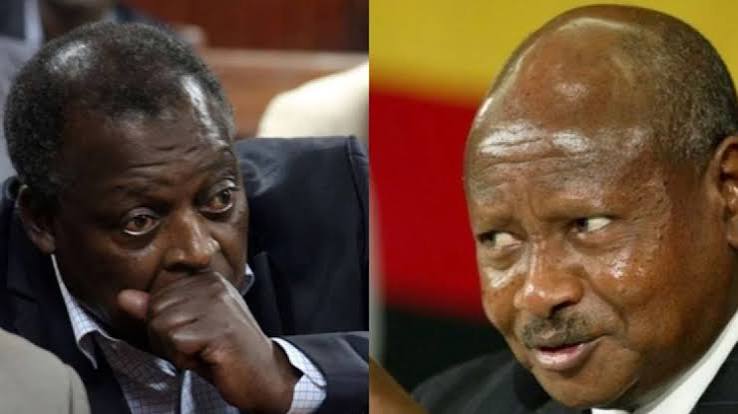
Nine months after the death of former Lugari Member of Parliament (MP) Cyrus Jirongo, a fresh storm over Kenya-Uganda petroleum trade has placed his name at the centre of a widening dispute between Presidents Yoweri Museveni and William Ruto.
The controversy deepened yesterday after Museveni disclosed that Jirongo was the Kenyan politician who alerted him in 2019 to Uganda’s alleged use of middlemen in procuring petroleum products through Kenya.
Museveni said he only learnt recently that Jirongo had died in a road crash in December 2025.
The disclosure has created an unusual twist in the fuel controversy given that the man identified by Museveni as the source of the original warning is no longer alive to explain what he told the Ugandan President or provide his account of the dealings.
Further, It also remains unclear if Uganda has imported any of its fuel from Kenya since the commencement of the Kenya’s framework agreements for its government-to-government (G-to-G) oil deal that was signed in March 2023, and began implementing the petroleum imports under the arrangement in April 2023.
Museveni said Jirongo approached him around 2019 and told him Uganda was obtaining petroleum through Kenyan intermediaries rather than directly from suppliers.
He said he immediately instructed his then Energy Minister Irene Muloni to address what he described as the problem.
“It was a Kenyan Senator called Jirongo who told me this around 2019,” Museveni said.
Museveni subsequently said the matter remained unresolved until 2023, when Uganda entered a new arrangement involving Vitol and Uganda National Oil Company.

He has claimed the new arrangement significantly reduced the cost of petroleum products, citing diesel falling from $118 to $83 per metric tonne.
The remarks have now collided with Kenya’s own defence of its Government-to-Government fuel importation system.
President Ruto, speaking to Kenyans in New York ahead of the 81st United Nations General Assembly, trashed criticism of Kenya’s model and challenged those questioning it to compare the landed cost of fuel in Kenya and Uganda.
Ruto said Kenya had eliminated brokers between the government and oil producers and described the country’s current model as more effective. He also said Malawi and Burundi had approached Kenya to understand how the system operates.
The timing of the exchange has intensified questions over whether Museveni’s account relates to the same arrangement currently under scrutiny in Kenya.
The Ugandan president has sought to clarify that his remarks concerned an earlier procurement system and not necessarily the current Kenyan administration.
He has also praised Ruto, saying the Kenyan President helped facilitate Uganda’s present arrangement and allowed Uganda to use the Kenyan oil pipeline, in which Uganda holds a 20.15 per cent stake.
Kenya’s Energy Ministry has meanwhile mounted a detailed defence of the G-to-G arrangement.
Energy Cabinet Secretary Opiyo Wandayi said the system was introduced in 2023 after a severe dollar liquidity crisis threatened fuel supplies and foreign-exchange reserves.
Opiyo said international oil companies — Aramco Trading Fujairah, ADNOC Global Trading and ENOC — supplied refined products on 180-day credit terms.
The ministry has also explained the involvement of Kenyan oil companies, saying international suppliers later nominated licensed local counterparties to handle supply logistics.
But the explanations have not ended the questions.
Former Deputy President Rigathi Gachagua has used Museveni’s disclosures to renew his criticism of the G-to-G arrangement, alleging that local intermediaries have benefited from the system. Those remain political allegations and have not been established by the court.
Meanwhile, Senator Richard Onyonka has called for parliament’s energy committees to scrutinise the arrangement and explain to Kenyans how it works and what the country pays for imported fuel.
Former Interior CS Fred Matiang’i has similarly demanded disclosure of the full agreement and greater scrutiny of the role of middlemen.