Court deals severe blow to Charles Nyachae in fight for Simeon Nyachae’s billions
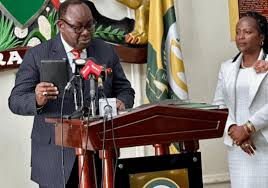
High Court rejected attempts by former East African Court of Justice judge Charles Ayako Nyachae to oust managers of Simeon Nyachae's multi-billion estates. He moved to court accusing his stepmother, Grace Nyachae, and his stepbrother, Leon Nyachae, both directors of Sansora Group, of unlawfully intermeddling with the estate.


The High Court in Nairobi has dealt a major blow to former East African Court of Justice judge Charles Ayako Nyachae in a protracted family dispute over the vast estate of his late father, former powerful Cabinet minister Simeon Nyachae, dismissing his bid to wrest control of the administration of the multi-billion-shilling wealth.

In a ruling that effectively cements the authority of the majority executors appointed under Nyachae’s will, Justice Rose Oganyo found that Ayako had failed to prove allegations that the estate had been mismanaged, wasted or subjected to unlawful dealings by the administrators currently overseeing its affairs.
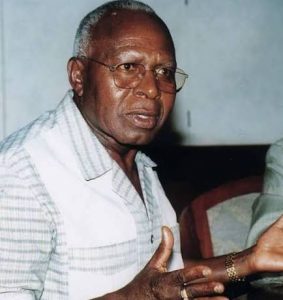
Nyachae, one of Kenya’s most influential post-independence politicians and businessmen, died in February 2021, leaving behind an estate estimated to be worth billions of shillings, including an extensive business empire and vast property holdings.
Before his death, the former Cabinet minister put in place a succession framework setting out how his wealth would be managed and eventually distributed among beneficiaries.
Court records show that after his death, a majority of the executors named in his will resolved that the estate would continue being managed by Sansora Group of Companies, which had overseen many of Nyachae’s business interests during his lifetime.
The arrangement, they argued, was intended to preserve continuity and remain in force until the High Court formally validated the will and confirmed the grant of representation.
Ayako, however, opposed the decision, maintaining that his co-executors had acted unlawfully by allowing Sansora Group to continue collecting rent and managing the estate’s assets.

Ayako moved to court accusing his stepmother, Grace Nyachae, and his stepbrother, Leon Nyandusi Nyachae, both directors of Sansora Group, of unlawfully intermeddling with the estate.
He also sued fellow executors Angela Mochache and Eric Maina Nyachae, alleging that they had abdicated their fiduciary duties by permitting the company to take over functions that should have been discharged directly by the executors.
Ayako sought orders barring the respondents from continuing to manage the estate and asked the court to appoint Ark Consultants Limited as an independent estate manager.
He further demanded a full account of all rental income collected from the estate since February 2021.
The former judge argued that despite being one of the executors named in his father’s will, he had been sidelined from key decisions and denied access to information regarding the management of the family’s wealth.
According to his court filings, Sansora Group had effectively assumed control over the administration process and collected substantial sums of money without adequate accountability.
However, Justice Oganyo rejected the allegations, finding that they were not supported by credible evidence.
The judge noted that the respondents had furnished the court with audited statements of accounts prepared by HLB Cezam & Associates LLP, detailing income received and expenditure incurred in the management of the estate.
The audited reports, the court observed, demonstrated that the estate’s finances had been properly accounted for.
“It is not proven that there was fraud on the will to create the majority executors,” Justice Oganyo ruled.
Addressing concerns over accountability, the judge said the majority executors had already discharged their obligations by producing an audited Statement of Affairs.
“The existence of the accounts and interest-bearing bank accounts demonstrates that the majority executors are discharging their fiduciary duties well,” she said.
Justice Oganyo further held that there was no legal basis for removing Sansora Group as estate manager.
She observed that the company had been entrusted by the late Nyachae himself with managing his wealth while he was alive and that a majority of the executors had endorsed the continuation of that arrangement after his death.
The court also found that Ayako had failed to provide independent evidence to substantiate claims that the estate had suffered deterioration, losses or financial prejudice.
The judge noted that he neither commissioned an independent audit nor called expert witnesses to challenge the audited financial reports presented by the respondents.
Justice Oganyo emphasized that allegations of mismanagement involving large and complex estates cannot be sustained on suspicion alone.
“Allegations of mismanagement, particularly in large and complex estates, must be supported by credible evidence and not mere suspicion,” she said.
The court further observed that following confirmation of the grant on June 2, 2026, the respondents were no longer under a continuing obligation to furnish Ayako with additional financial records unless he demonstrated wrongdoing.
“Having provided audited accounts before the confirmation of the grant, in my view meets the expectation of the applicant in the current application,” Justice Oganyo stated.
“Upon the grant being confirmed on June 2, 2026, the respondents owe no further duty to provide the said information of account, as the applicant has not proved that the estate was intermeddled with in the face of the said audit.”
Throughout the proceedings, the respondents maintained that Sansora Group’s involvement was not a recent arrangement designed to seize control of the estate, but one personally established by the late Nyachae.
They told the court that the company had been appointed under a written agency agreement executed in 2015 and that the deceased expressly intended for the arrangement to continue after his death until the succession process was concluded.
They further argued that Sansora Group had continued managing the estate in good faith, with the approval of the majority of executors and the support of most of Nyachae’s children.
The case exposed deep divisions within the Nyachae family over control of one of Kenya’s most significant private fortunes, pitting Ayako against his stepmother, siblings and fellow executors in a battle over who should steer the administration of the late minister’s expansive empire.