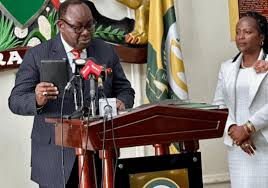
Court stops bank from selling Kencom Sacco land over Sh932million loan arrears, orders proper accounting
Justice Mugambi directed that the exercise should be concluded within 30 days and the Sacco should pay what is due to the bank within 45 days


The court has stopped National Bank of Kenya from selling land on which Kencom Sacco Society has build upmarket houses over loan arrears amounting to Ksh 932, 785,763 million, which the Sacco contests, and ordered a proper accounting.
In a judgement issued on February 7, Milimani Commercial Court Judge Freda Mugambi directed that the exercise should be concluded within 30 days and the Sacco should pay what is due to the bank within 45 days failure to which the lender will be at liberty to dispose the property.
“An injunction order is hereby issued against the sale or auction of the suit property pending the proper accounting under the Musharaka financing agreement in accordance of the findings on this judgement within 30 days,” Justice Mugambi ordered.
The Sacco moved to court July 17, 2019 after the bank sought to sell the properties following a dispute over the actual amount that remains due after it rejected an offer to be paid Ksh 750 million to clear the loan extended to it which were advanced under the Islamic banking principles of musharaka and mudaraba.
The purpose of the loan was to facilitate the Sacco’s development of 113 houses, which was secured under replacement charge over property, LR 12825/195.
The houses comprise of four-bedroom townhouses and villas in the upmarket Runda estate. The bank placed a notice to auction them through Nyaluoyo Auctioneers.
Under the said agreement, the Sacco says it borrowed Ksh 1.95 billion for a period of two years to purchase the land and construct the 113 housing units. It submitted to court that the bank begun charging interest before first collecting and settling the principal amount and caused delays in the disbursement of funds.
The Sacco says that it has already paid to the bank a total of Ksh 2.4 billion, adding that any amount over and above the principle amount ought to be treated as profit and therefore nothing is due to the Bank. The Bank on the other hand takes issue with the accounts submitted by the Sacco in support of these figures.
“.It is unreasonable for the Bank to claim that it is not responsible for disproving the Sacco’s assertion. The Bank holds the statements of accounts for the musharaka and the escrow accounts, making it their duty to provide accurate and up-to-date statements. These statements should detail the proceeds of sales paid so far, the profits from these sales, and the outstanding amounts in terms of both profits and the principal amount due to the Bank,” Justice Mugambi ruled.
The Sacco was seeking a declaration by the court that the bank’s continued demand is unlawful, an injunction against the sale of the suit property, taking of accounts and a refund of overpaid amounts together with costs.
During the hearing, KCB Group banker Joseph Mutuku who testified that even after developing and selling the housing units, the bank failed to discharge the charge over the original title which delayed the transfer of housing units to the buyers.
He confirmed that the Sacco was required to open an escrow account for all proceeds from the sales, however he acknowledged that not all proceeds had been deposited into the escrow account, attributing the failure to buyers who did not deposit the monies directly, rather than to the Sacco.
He further testified that the parties had not agreed on a profit-sharing ratio, which was to be determined at the end of the project
Abdishakur Mohamed, an Islamic banking consultant, submitted that under Islamic law, the offer letters relating to the two facilities were binding on both parties, provided they were signed with full knowledge of their terms. He further stated that the security in this case was charged under Kenyan law, not Islamic law.
The bank admitted that it extended financial facility to the Sacco amounted to Ksh 1,950,000,000 for the construction of 113 housing units. It stated that the amount was to be repaid to the Bank at a rate of 15.45%
The bank said the Sacco failed to regularise the account and deposit the proceeds from sales into the escrow account, as stipulated in the letter of offer.
The bank held that it is within its right to exercise its statutory power of sale and issue a statutory notice of sale under Clause 8 of the replacement charge and the Land Act.
In determining the matter, Justice Mugambi noted that the dispute before the court pertained to the amounts demanded by the bank under the musharaka agreement, as the mudaraba agreement had been fully complied with and settled.
The judge analysed the issues from a passage by Lord Clarke, in RTS Flexible Systems Ltd V Molkerei Alois Müller, which stated that “Whether there was a binding contract between the parties and if so, upon what terms depends upon what they have agreed. It depends not upon their subjective state of mind, but upon a consideration of what was communicated between them by words or conduct, and whether that leads objectively to a conclusion that they intended to create legal relations and had agreed upon all the terms which they regarded or the law requires as essential for the formation of legally binding relations.”
The court noted that in alignment with the core characteristics of Islamic banking, the parties recognised and agreed that no interest would be payable on the facility and the bank claims to have adhered.
“However, from an examination of the loan statements covering the period between October 4, 2013 and April 26, 2015, it is evident that the Bank had in fact been charging interest on the facility,” Justice Mugambi noted.
The judge therefore found the demand by the bank based on interest rates was unlawful.
The judge further noted that when the Sacco was repaying the loan, the issue of the profit ratio was never raised until the Bank threatened to exercise its statutory power of sale.
“Having agreed to the terms in the offer letter and benefitted from the facility, it is in bad faith for the Sacco to attempt to disown the terms now.”
The Sacco was ordered to pay the costs of the suit.