KNCHR recommends Sh2.5 million compensation for protest death victims as reparations begin
The report outlines a national compensation programme targeting victims of human rights violations linked to the 2017 and 2022 post-election violence, the 2023 and 2024 Finance Bill protests, and the 2025 Saba Saba demonstrations.

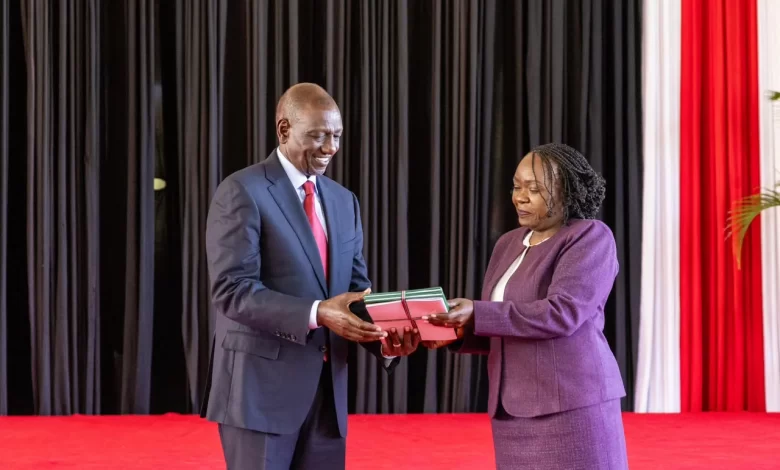
The Kenya National Commission on Human Rights (KNCHR) has recommended that victims of right-to-life violations, including those killed during demonstrations and political unrest, receive at least Sh2.5 million in compensation, in addition to medical expenses.
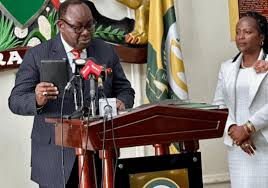
The proposal is contained in a comprehensive reparations framework submitted to President William Ruto at State House earlier today, Monday June 15, 2026.
The report outlines a national compensation programme targeting victims of human rights violations linked to the 2017 and 2022 post-election violence, the 2023 and 2024 Finance Bill protests, and the 2025 Saba Saba demonstrations.
The development comes after the government allocated Sh2 billion in the first supplementary budget for the 2025/2026 financial year to support compensation of victims.
While presenting the report, KNCHR Chairperson Claris Ogangah said the initiative was aimed at promoting healing, restoring public trust and strengthening national unity.
“Kenya has taken an important step towards healing historical wounds, strengthening national unity and building a society founded on justice, human dignity, accountability and respect for human rights,” she said.
According to KNCHR, the commission documented 1,815 claims and received an additional 1,022 cases from the Independent Policing Oversight Authority (IPOA), while others were forwarded by the Ministry of Interior.
So far, 1,101 victims have been verified and have consented to participate in the reparations programme.
The verified cases include 245 deaths, 135 cases of torture and injuries, 473 violations involving freedom and security of the person, 75 cases of sexual violence, 35 enforced disappearances and 138 incidents of property destruction.
The commission noted that verification was based on a “reasonable basis to believe” standard, relying on medical records, police occurrence book reports, witness statements and photographic or video evidence.
KNCHR found that human rights violations during demonstrations were widespread and recurrent, often involving excessive use of force, arbitrary arrests, abductions and destruction of property. It also observed that many victims suffered economic hardship through loss of livelihoods and limited access to healthcare.
Under the proposed compensation framework, victims of torture and aggravated sexual violence would receive Sh2 million, while those whose freedom and security were violated would be awarded Sh1.5 million. Severe injury victims would receive Sh1 million, moderate injuries Sh500,000, and minor injuries or arbitrary arrest cases Sh50,000.
The commission further proposed compensation of Sh750,000 for victims of rape, defilement and sexual assault, and Sh100,000 for loss of business arising from the violations.
Ogangah noted that not all reported incidents qualified as gross human rights violations warranting reparations.
“Not all cases reported to the commission qualified as gross human rights violations for reparations, as some were isolated criminal acts,” she said, adding that such cases would be handled through the criminal justice system.
Beyond financial compensation, KNCHR recommended a formal public apology from the government acknowledging responsibility for documented violations, accompanied by guarantees of non-repetition and institutional reforms.
The commission also called for immediate interim compensation for victims awaiting a full legal framework, as well as social support measures including medical care, counselling, education assistance and livelihood restoration programmes.
For long-term accountability, KNCHR proposed the establishment of a national reparations policy, a dedicated reparations law and a permanent reparations fund. It also urged reforms to public order laws, stronger oversight of security agencies and enhanced protection for human rights defenders.
The commission warned that delays in compensating victims and weak accountability mechanisms continue to undermine public trust and perpetuate injustice. Compensation payments are expected to begin next week as the government moves to implement the reparations programme.