High Court deals Sh1.8billion KPLC’s security tender a blow, upholds cancellation
Judge backs procurement board’s decision, faults Managing Director Eng. Joseph Siror’s led Kenya Power tender document for flaws that tainted entire Sh1.8billion deal. The disputed tender was divided into two categories—A and B—and attracted bids from 70 companies, among them Riley Falcon Services Limited, Ismax Security Services Limited, Lavington Security Services Limited, Spyeagle Security Services Limited, Sumich Solutions Limited and Hounslow Security Limited.

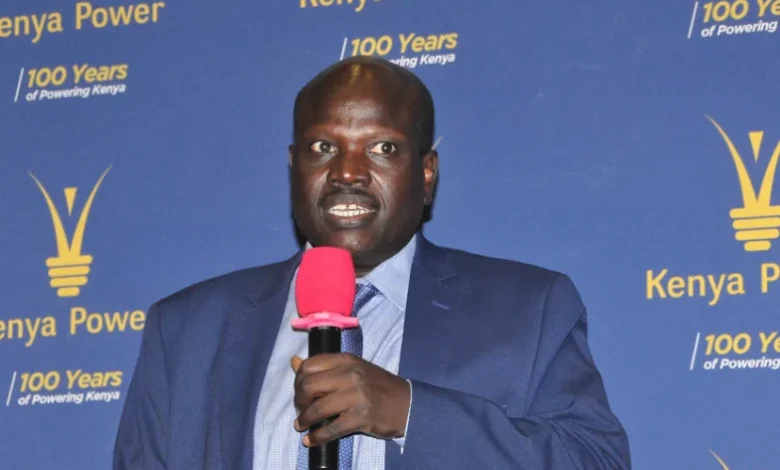
The High Court in Nairobi has upheld the cancellation of a multi-million-shilling Kenya Power and Lighting Company (KPLC) security services tender, ruling that flaws in the tender document compromised the entire procurement process.
The ruling now shines a new spotlight on the Kenya Power’s procurement and tendering processes, perennially dogged with claims of fraud even as the court dismissed KPLC’s argument claiming that the Public Procurement Administrative Review Board (PPARB) had no powers to entertain separate cases filed by aggrieved security companies.
Justice William Musyoka dismissed KPLC’s challenge against PPARB, finding that the procurement regulator acted within its mandate when it ordered the electricity company to return to the drawing board.
The judge dismissed arguments by KPLC and several successful bidders that the board had exceeded its jurisdiction by examining issues affecting a different category of the tender from the one initially challenged.
“It has not been established that the Public Procurement Administrative Review Board acted illegally or in excess of its jurisdiction, or its decision was irrational or unreasonable, or it adopted a procedure, in the lead-up to the determination of the matter before it, which was unfair,” Justice Musyoka ruled.
He consequently dismissed the applications and discharged the temporary orders that had been issued in the various cases.
Tender flaws at the centre of dispute
The disputed tender was divided into two categories—A and B—and attracted bids from 70 companies, among them Riley Falcon Services Limited, Ismax Security Services Limited, Lavington Security Services Limited, Spyeagle Security Services Limited, Sumich Solutions Limited and Hounslow Security Limited.
Following the initial evaluation, 31 firms were declared unresponsive and eliminated from the competition. Another bidder was later disqualified at the technical evaluation stage.
Thirty firms proceeded to financial evaluation in the first category, with Ismax, Lavington, Spyeagle and Sumich eventually emerging as successful bidders for Class A.
In Class B, 23 of the firms that had progressed reached the financial evaluation stage, with 15 companies, including Hounslow Security, eventually receiving awards.
The dispute began when Riley Falcon challenged the procurement process before PPARB.
On July 9, 2026, the Board upheld Riley’s grievances and ordered KPLC to cancel the tender and restart the process.
The decision triggered a series of legal challenges from the successful bidders and KPLC.
Successful firms fight back
Hounslow challenged the ruling, arguing that Riley had participated in Class A and therefore had no basis to challenge or interfere with the Class B awards.
Ismax, Spyeagle and Sumich filed separate cases, supporting Hounslow’s position that PPARB had no jurisdiction to scrutinise the Class B component.
KPLC also moved to the High Court, accusing the Board of acting irrationally and introducing requirements that had not formed part of Riley’s original complaint.
The power company argued that PPARB had dismissed Riley’s specific claims but then proceeded to cancel the entire procurement process on grounds that had not been pleaded.
KPLC maintained that the tender had already been awarded to the successful companies and insisted there had been no specific adverse finding against Class B.
At the heart of Riley’s complaint was an allegation that Sumich was owned by a public officer, alongside concerns over the allocation of 206 security guards to Ismax.
Judge: fault started with tender document
PPARB defended its decision, arguing that it was legally required to examine the tender document and the evaluation process to establish whether the procurement complied with the law.
The board said contradictory mandatory provisions in the tender document had created an unclear and inconsistent framework, rendering the entire procurement process unlawful.
It argued that successful Class B bidders could not rely on their right to be heard to preserve a procurement process that was itself legally defective.
Justice Musyoka agreed.
He found that PPARB had not improperly expanded the scope of the case but had examined the tender document alongside the evaluation report to determine whether Riley’s bid—and the wider evaluation—had been conducted according to the published criteria.
“The Public Procurement Administrative Review Board considered the tender document, as against the evaluation report, with respect to the evaluation of the bid by Riley Falcon Security Services Limited, and the other bids, to arrive at the finding that the tender document had the principal weakness, which tainted the entire evaluation process,” he ruled.
The judge said the inconsistencies went to the integrity of the entire procurement.
“An adverse finding on the flaws identified in the said document naturally affected the entire process, regardless of the class of the award,” Justice Musyoka said.
He added that the defects originated from the tender document itself, making it impossible to isolate one category from the other.
Sh9.03 million bid cut to Sh7.5 million
One of the issues that strengthened the Board’s case was the absence of a clear methodology for revising the number of security guards and the resulting financial quotations.
Justice Musyoka noted that although the tender document prescribed a mandatory number of guards, it did not explain the methodology used to revise the requirement.
He cited Ismax’s Nairobi quotation as an example.
The company had quoted Sh9.03 million, but the evaluation committee recommended it for Sh7.5 million without explaining the basis for the reduction.
The judge said PPARB was therefore entitled to examine the wider evaluation exercise to establish whether the bids had been assessed against the criteria contained in the tender documents.
“The Public Procurement Administrative Review Board did not purport to audit the entire procurement process,” he said.
Rather, the board’s examination was triggered by the issues surrounding Riley’s evaluation and was necessary to establish whether the procurement complied with the Public Procurement and Asset Disposal Act and Article 227 of the Constitution, which requires public procurement to be fair, equitable, transparent, competitive and cost-effective.