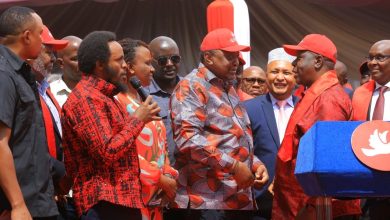
Blow to president Ruto as High Court declares housing levy unconstitutional


President William Ruto’s campaign flagship housing project has been thrown into disarray after the High Court today declared the controversial housing levy unconstitutional.
A three-judge bench consisting of Lawrence Mugambi, Christine Meoli and David Majanja that was appointed by Chief Justice Martha Koome declared the housing levy as unconstitutional on the basis that it is discriminatory to impose a tax on salaried Kenyans alone and excludes those working in the informal sector.
“An order is hereby granted prohibiting the respondent from collecting or otherwise charging on Affordable Housing Act on the basis of section 84 of the Finance Act and all prayers on the consolidated petition not specifically granted.” Majanja read the ruling on behalf of the bench.
While reading the ruling, Justice Majanja ruled that sections 84 and 72 to 78 of the Finance Act 2023 are also null and void.
The housing levy which has been a cardinal pillar of the 2023 Finance Act was formally introduced in July this year with Kenya Revenue Authority (KRA) being mandated as the collector.
Employers have been remitting 1.5 per cent alongside a similar rate for their employees.
The president William Ruto-led government cited that the 1.5 percent deduction would enable them to achieve their plan of constructing affordable houses for low-income Kenyans.
The Finance Bill 2023 was passed by parliament on June 22, 2023, and later assented by President William Ruto on June 26.
The High Court later suspended the implementation of the act on June 30, after multiple petitions were filed.
On July 29, the Court of Appeal lifted the suspension, leading to a hearing of the case on September 13.
Counsel asked the judges to give the government forty-five days to mull for a way forward.
Busia senator and human rights activist Okiya Omtatah and six others moved to court seeking to stop the implementation of the Finance Act 2023.