Government sued over controversial Sh7.8billion contract for mere 25 smart traffic cameras


The Law Society of Kenya (LSK) and a road safety expert have sued the Government of Kenya (GoK) and five others over Sh7.8billion contract opaquely awarded to a foreign firm without competitive bidding or public participation for the installation of twenty-five smart traffic cameras in Nairobi.
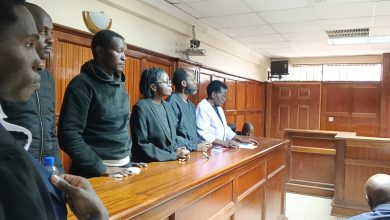
In a petition filed before the High Court, LSK and Gerald Anyega Osiemo, both first and second petitioners in the suit respectively want the contract awarded to Samsung of South Korea suspended forthwith.
Others sued include Road and Transport Cabinet Secretary Davis Chirchir, the Speaker of the National Assembly Moses Wetang’ula, the Secretary to the Cabinet Mercy Wanjau, Prime Cabinet Secretary Musalia Mudavadi, and Inspector General of the National Police Service Police Douglas Kanja.
LSK in its case filed under urgency claimed the 25 cameras meant to be installed in Nairobi were procured illegally as there was no competitive bidding or public participation.
LSK’s lawyer Frank Oriku said that the cost of the cameras was overpriced and meant to be spent in an opaque manner.
In a press release filed in court, the Kenya Urban Roads Authority (KURA) announced that it had signed a contract with Samsung of South Korea to construct the Nairobi Intelligent Transport System (ITS) establishment and junction improvement project, phase one.
KURA said that the project was estimated to cost USD 61 million (Sh7.8 billion at the current exchange rate) and was funded by Korea Exim Bank. According to the agency, the cameras, sensors, and traffic lights would be installed to monitor traffic flow, and the project would be completed by February 2027.
“The ongoing implementation of the project imposes an immediate and unjustified financial burden on the taxpayers and risks misuse of public resources in contravention of the Public Finance Management Act, and the Public Procurement and Asset Disposal Act,” argued Oriku.
Oriku told High Court Judge Chacha Mwita that LSK and Osiemo had asked the ministry to disclose details about the deal but its letters went unanswered.
He asserted that taxpayers’ money should be used prudently and transparently.
“The urgency of this matter is further heightened by the impending expenditure of funds already earmarked for the procurement, which, if not restrained, will render any subsequent judicial intervention ineffective. The interest of Justice is to prevent the continued violation of the constitution and statutory,” he said.
According to him, purchasing the cameras would set a dangerous precedent for unchecked government expenditures.
“The first respondent (Chirchir) has proceeded to approve and implement a project for the procurement of 25 traffic cameras and related systems at an exorbitant cost of Sh6.1billion in blatant violation of Articles 10, 35, 47, and 201 of the constitution,” said Oriku.
LSK CEO Florence Muturi in her supporting affidavit, said that the approval and subsequent procurement violated good governance, transparency and accountability.
At the same time, she argued that they had violated principles of public finance including prudent use of public finances.
“The project imposes a disproportionate financial burden on taxpayers without demonstratable value for money. The opaque procurement process violates the provisions of the Public Procurement and Asset Disposal Act, 2015, which require fairness, competitiveness, and transparency in acquiring public goods and services,” said Muturi.
According to her, several stakeholders had, in December last year, pinpointed the project as too expensive for taxpayers. She said that despite this, the user ministry never gave a justification for the project.
She asserted that the cameras’ cost was too lopsided to the intended benefit of monitoring traffic in the capital city.
“The exorbitant cost of Sh6.1billion is disproportionate to the anticipated cost benefits of the project, given that the alternative measures such as deploying police officers to manage traffic at the targeted junctions would be far more cost-effective and efficient,” said LSK CEO.
According to her, the money could be used to fund crucial healthcare and education sectors, which require more money than road users.
“Despite appeals from stakeholders, including the second petitioner, urging the respondent to provide adequate justification for the project, such requests have been ignored, thus undermining public trust and accountability,” she said.
The case will be mentioned on Wednesday next week, February 26, 2025.