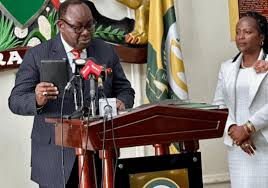
Demystifying terrorism charges: terrorism prevention laws provide terror charges for causing massive destruction of property
POTA defines terrorism as an act that involves the use of violence against a person, endangers the life of a person other than the person committing the action

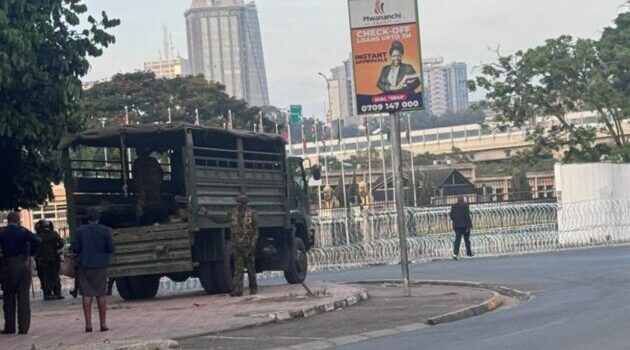
The recent decision by the Office of the Director of Public Prosecutions (ODPP) to charge anti-government protesters with terrorism charges came as a shocker and the charges were seen as a weapon used by the executive to silence dissidents.
However, a look at the provisions of the Prevention Of Terrorism Act (POTA) of 2012 reveals that most if not all the offences the suspects have been charged with are provided for, in the Act.
Whereas the terrorism charges are seen as political, the offences are clearly listed as such in the POTA and perhaps the issue of concern should be whether it was necessary for the decision to level the charges was the best.
POTA defines terrorism as an act that involves the use of violence against a person, endangers the life of a person other than the person committing the action.
The Act also describes terrorism as an act that creates a serious risk to the health or safety of the public or a section of the public, or one that results in serious damage to property.
This is precisely the provision that the DPP Renson Ingonga says has been overlooked by critics accusing him of being used by the executive in a fight to save itself from criticism.
The outrage prompted Ingonga to remind the public that the terrorism laws have been in existence and the fact that no one had been charged with it did not make it unapplicable in the circumstances.
“Under the POTA, terrorism is not only when you use bombs or explosives. If you commit acts that endanger human lives and government installations – that is an act of terrorism. That is why we can charge people under that Act,” Ingonga stated last month amid heightened criticism on his office.
“We are not required to charge under that Act (POTA) only when people have used or are in possession of guns.”
Ingonga pointed out that most of those critiquing his office have based their accusations on skewed reading and interpretation of terrorism act as only limited to section (iv) on use of firearms and explosives. POTA further defines terrorism, in sub sections (iv) (v) and (vi).
“Terrorism is an act which involves the use of firearms or explosives, release of any dangerous hazardous, toxic or radioactive substance or microbial or other biological agent or toxin into the environment,” the Act outlines the offences, and this is why majority have been holding opinion that the activists should not have been charged with the terrorism offences.
The activists were charged with terrorism in relation to torching of Kikuyu police station, several police stations and government offices across the country, something that had never happened before. Ordinarily, they would have been charged with arson and malicious damage to property.
But Ingonga says the widespread destruction of both public and private property during the protests warrants the charges and the ODPP has not acted in malice.
Previously, the ODPP had charged social media activists and government critics involved in the mobilization for the protests with offences under Computer Misuse and Cybercrime Act of 2018.
Others, mainly the foot soldiers directly involved in street protests were charged with taking part in unlawful assembly and riot in contravention of section 78 of the Penal Code and others, malicious damage to property in relation to properties destroyed during the demonstrations.
There are a significant number of protesters who are facing serious offences including the capital offence of robbery with violence for robberies committed during the protests.
However, after the July 7 “Saba saba” dozens of protesters and mainly political actors allied to opposition heavyweights were charged with terrorism in connection to torching of Kikuyu law courts in Kiambu County, government offices in Embu and several police stations countrywide.
But the terrorism charges on activists and politicians allied to opposition luminaries sparked a public outrage because there were no expectations for such charges.
Former Law Society of Kenya (LSK) president Eric Theuri said charging any of the activists with acts of terrorism is completely ridiculous. He added that it has no legal basis.
Theuri explained that terrorism is a grave criminal offense involving high levels of coordination, financing, and a clear intent to cause widespread destruction and loss of life, a criterion he says cannot apply in cases involving protesters.
“It involves a lot of organization, a lot of finances, you know, and people sitting somewhere and planning to cause death and destruction within a country,” he said.
“You may want to use how terrorism is defined to show that some of those things happen, but it’s much more than that.”