From grain to fuel baron: This man Jaffer Mohamed Hussein
For years, Jaffer has cultivated a reputation as a discreet but influential player who has navigated successive administrations—from the era of President Daniel Moi, through Mwai Kibaki and Uhuru Kenyatta, and now under President William Ruto

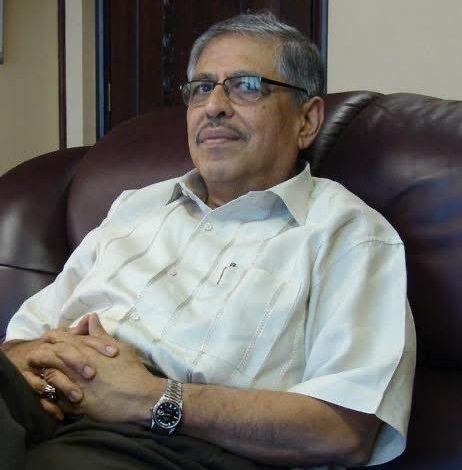
Mombasa billionaire Jaffer Mohamed Hussein, long known for his quiet influence in Kenya’s business and political circles, has been thrust into the spotlight amid renewed scrutiny of the country’s fuel importation arrangements and the growing cost of petroleum products.
Jaffer’s linked firm, One Petroleum Limited, alongside Oryx Energies Kenya Limited, was among companies cleared by the Ministry of Energy in early March to import 60 tonnes of petrol each outside the Government-to-Government (G-to-G) fuel procurement framework. The imports were arranged with three Gulf oil majors at a significantly higher cost than the standard state-negotiated supply.
Records show the companies paid about $290 per tonne—nearly three times the $84 per tonne rate under the G-to-G deal involving Saudi Aramco, Emirates National Oil Company, and Abu Dhabi National Oil Company.
The decision came as Kenya moved to avert fuel shortages triggered by instability in global oil markets linked to geopolitical tensions in the Middle East.
The arrangement is now expected to feed into the pricing structure used by regulators, raising concerns that Kenyan consumers could face higher fuel costs in the coming pricing cycles.
Jaffer, whose business portfolio spans logistics, energy, grains and bulk handling infrastructure, controls assets valued at over Sh16 billion, including Grain Bulk Handlers Ltd, Africa Gas and Oil Company (AGOL), and One Gas Limited.
His companies operate critical infrastructure such as the Mbaraki Bulk Terminal in Mombasa, which has a storage capacity of 50,000 metric tonnes and handles a wide range of petroleum products.
The terminal, one of the region’s most advanced fuel handling facilities, is equipped with loading gantries, large-scale truck marshaling yards, and specialised systems for bulk bitumen and fuel storage.
It plays a central role in Kenya’s petroleum supply chain and is a key node in regional distribution.
For years, Jaffer has cultivated a reputation as a discreet but influential player who has navigated successive administrations—from the era of President Daniel Moi, through Mwai Kibaki and Uhuru Kenyatta, and now under President William Ruto.
In April 2023, speaking during the launch of Grain Bulk Handlers Limited at the Embakasi Inland Container Depot (ICD) vowed to donate Sh100 million to help President Ruto launch a new Hustler Fund product wholly funded by corporates.

Speaking during the commissioning of his company, he argued that the move was key to empowering small-scale entrepreneurs across the country.
“I would like to ask the President to establish a Hustler Fund funded by corporates. They will get some of the profits on a bond of 5 years or 10 years interest-free. Just imagine how many people we can bring to the middle class. No country can progress without the middle class,” Jaffer stated.
His businesses, mostly riddled with controversies have often been linked to strong networks across political and economic institutions.
His firms have also faced past scrutiny. In 2021, the Kenya Revenue Authority (KRA) reportedly raised a Sh68 million tax dispute against Grain Bulk Handlers Ltd, though the matter did not escalate publicly. Port insiders have long pointed to the company’s dominance in bulk grain handling at the Port of Mombasa, an arrangement that has survived repeated attempts at reform.
The latest fuel import deal has revived debate over pricing transparency and the influence of major private players in Kenya’s energy sector, particularly at a time when global oil volatility continues to shape domestic economic pressures.
The tycoon is said to be in every political arithmetic in all electioneering periods in the country by quietly funding rival presidential campaigns to ensure that he remains in the good books of whichever candidate would carry the day in the presidential election.
In the 2022 presidential election for instance, Jaffer threw his weight behind the then Azimio Coalition candidate, the late Raila Odinga, pumping into the campaigns billions of shillings.
But those close to the tycoon reveal that even as he publicly identified with the Raila campaign, he discreetly had his tentacles in the rival team headed by Ruto, courtesy of one of the directors of One Petroleum Limited, a son for former Kenya Ports Authority (KPA) Managing Director, and a close associate of Prime Cabinet Secretary Musalia Mudavadi, a principal in Ruto’s Kenya Kwanza Coalition then.
The former KPA boss whose sone is listed as one of the directors of One Petroleum Limited rose to the helm when Mudavadi headed the Transport Ministry in the Daniel Moi government.
Other listed directors of One Petroleum Ltd are Jaffer family including Mojtaba Mohammed Jaffer, Ali Abbas Jaffer and Ali Salaah Balala who serves as the Executive Director.
After the last general elections, the Ruto regime appeared to crack down on the Jaffer empire when it brought in a new player, Taifa Gasciwned by Tanzanian billionaire Rostam Aziz, with his initial investment being a 30,000 tonne gas plant at the Dongo Kundu Special Economic Zone in Likoni, Mombasa.
According to available records, One Petroleum Ltd (OPL) was established in November 2010 and is a licensed partner of the Energy Regulatory Commission (EPRA) and a recognized supplier for the Open Tender System (OTS).
The company operates the Mbaraki Bulk Terminal, with a capacity of 50,000 metric tonnes, enabling it to efficiently handle large volumes of petroleum products.
Its monthly imports of Automotive Gas Oil (diesel) stand at about 850,000 metric tonnes, records indicate.
Among the products supplied are heavy fuel oil (HFO), petrol (PMS), diesel (AGO), jet fuel (JET-A1), petrochemicals, low sulphur fuel oil (VLSFO), lubricants, and bitumen. The Mbaraki Bulk Terminal, a proud member of the Oil Spill Mutual Aid Group (OSMAG), is central to One Petroleum’s operations, boasting a 50,000 MT capacity for efficient handling of fuel and bitumen.
Equipped with advanced infrastructure, the terminal features specialised loading gantries, a 35,000 SQFT warehouse for drummed products, and a marshaling yard for up to 100 trucks simultaneously.
It’s East Africa’s only terminal with heated tanks and pipelines for Bulk Bitumen, efficiently handling Diesel, Petrol, Fuel Oil, and Molasses, serving diverse clients and boosting supply chain efficiency.
In the controversial deal, One Petroleum was quietly allowed to import expensive petrol at three times the normal cost in early March, positioning it to reap billions in profits as the country grappled with a looming oil crisis occasioned hy the conflict in the Middle East.
The fuel is also said to be contaminated and Kenya Pipeline Company (KPC) acting Managing Director Pius Mwendwa told the Senate Energy Committee that the condemned fuel has already found its way into the Kenyan market.
Available information show that at the time, the firm quoted a premium of 290 US dollars per tonne, equivalent of Sh37,691 which was thrice the 84.97 dollars or Sh19,917 quoted for a similar quantity under the Government-to-Government deal involving Saudi Aramco, Emirates National Oil Company and Abu Dhabi National Oil Company.
The two large consignments imported outside the G-to-G framework were to be part of those used in setting the monthly pump prices from April 2026, resulting in Kenyan consumers inevitably experiencing a sharp rise in the cost of fuel and the attendant repercussions.
Jaffer had previously had his run-ins with the law, with a strong of court cases which hardly ever saw the light of day, thanks to his firm grip on the country’s corridors of justice as well as the media, both mainstream and social.
In 2021 for instance, the Kenya Revenue Authority (KRA) slapped GBHL a tax arrears bull amounting to Sh68 million, but the matter was quietly swept under the carpet with sources pointing at the intervention of top National Treasury officials at the time.
For many years, GBHL retained a firm monopoly over the Bulk grain importation tender at the port of Mombasa, despite numerous attempts by successive committees of the National Assembly to break this monopoly.