Canada’s push back against Trump over ‘Lake America’ name as trade war deepens
The name change comes against the backdrop of increasingly strained U.S.-Canada relations, with tensions between the longtime allies intensifying after recent trade talks broke down. Trump has also stepped up his attacks on Canadian leadership while threatening to impose a 50 per cent tariff on vehicles and auto parts imported from Canada, with the proposed duties set to take effect Jan. 1, 2027.

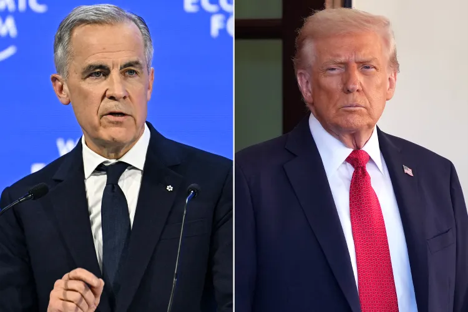
Canadian Prime Minister Mark Carney has rejected US President Donald Trump’s decision to rename Lake Ontario “Lake America”, insisting Canada will continue using the centuries-old name as tensions between the two neighbouring countries escalate.
Trump signed an executive order on Thursday seeking to officially change the name of the Great Lake, which is shared by the United States and Canada, declaring the move “effective immediately”.
The order directs the US Department of the Interior to update the name in the Geographic Names Information Service, the federal government’s official repository of domestic geographic names, within 30 days.
But Carney dismissed the move, arguing that Lake Ontario’s name has a history stretching back more than 400 years.
“The name Lake Ontario comes from the Wendat word Ontari’io, which, appropriately, means ‘the lake is beautiful, the lake is big,’” Carney said in a statement posted on X on Thursday.
“The name is more than 400 years old, predating both the Confederation of Canada and the Declaration of Independence of the United States of America,” he added.
“We know that America is changing. Their trading relationships, their foreign policies, their national monuments, their hydronyms.”
“Canadians also know that naming reality means calling it Lake Ontario – then, now and always,” Carney said.
Trump has repeatedly threatened to rename the lake amid a worsening trade dispute with Canada. On Wednesday, he posted a video showing him using a black marker to cross out “Lake Ontario” and write “LAKE AMERICA” above it.
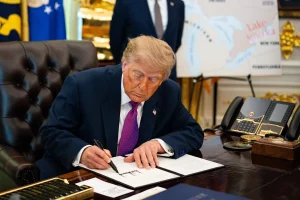
“We’re gonna make a little change, we’re gonna call it something different than Lake Ontario,” Trump said in the video. “We’re gonna call it Lake America. And all it takes is a good pen and some intelligence.”
At a Thursday news conference in the Oval Office, Trump linked the renaming directly to his frustrations with Canada’s trade policies and leadership.
“Canada has been ripping us off for a long time on trade,” Trump said, accusing Ottawa of failing to contribute sufficiently to its own defence.
“We defend Canada for nothing… They don’t pay us to defend Canada but we defend Canada,” he said, adding that Canadian officials had “treated us very badly” and were “nasty people”.
“So the lake change – the Lake of America – was something I’ve been thinking about for a long time, actually,” Trump said.
The name change comes days after trade negotiations between Washington and Ottawa collapsed, with the US imposing new 50 per cent tariffs on about $20 billion worth of Canadian goods. Canada has vowed to respond with “dollar for dollar” counter-tariffs on roughly 700 US products starting next month.
Trump also floated the possibility of renaming other major bodies of water bordering the US.
“Now all we need is an ocean,” he told reporters. “Maybe we’ll have to change the name of the Atlantic and/or the Pacific. Maybe we’ll change them both.”
The Lake Ontario order is largely symbolic and applies only to how the US federal government refers to the lake. Canada is not legally compelled to adopt the new name.
The dispute echoes Trump’s 2025 decision to rename the Gulf of Mexico as the “Gulf of America”, a move rejected by Mexico and not adopted universally.
Critics have condemned Trump’s renaming campaign. Former New Jersey Governor Chris Christie described the latest move as “Childish. Completely childish,” arguing that the president should focus on more pressing challenges facing Americans.
Despite the controversy, Trump appears determined to use geographic naming as part of his broader “America First” agenda, adding another symbolic flashpoint to already strained US-Canada relations.