Alarm as Kenya records 54 HIV infections, 57 deaths daily

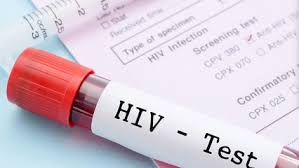
Alarm is growing over Kenya’s HIV response after health officials revealed that the country is recording at least 54 new infections and 57 related deaths every day, raising fears of a potential reversal of gains made over decades.
Appearing before the National Assembly’s Departmental Committee on Health, Douglas Bosire, the acting Chief Executive Officer of the National Syndemic Diseases Control Council, warned that declining investment in prevention programmes is driving up new infections and placing additional strain on the healthcare system.
He told lawmakers that about 1.3 million people are currently living with HIV in Kenya, with the government spending approximately Sh19 billion annually on life-saving antiretroviral treatment.
However, he cautioned that the cost of care will continue to rise if new infections are not urgently reduced.
“We are seeing at least 54 new infections every day. That means more people will require treatment, increasing the financial burden on the health system,” Bosire said.
Bosire warned that without sustained support from development partners, the country’s health financing framework—including the Social Health Authority—could struggle to cope. “If funding for antiretroviral drugs were withdrawn, the system would collapse under the pressure,” he added.
A report by the National Syndemic Disease Control Council (NSDCC) released in November 2025 showed that Nairobi County has overtaken the Nyanza region as the region with the highest HIV-AIDS related infections.
The report also showed deaths related from HIV-AIDS have skyrocketed significantly with majority of women leading in new infections at 4 per cent compared to men at 2 per cent nationally.
Curiously, the data further reveals that infections remain highest among youth aged 15 to 34, who form the bulk of new cases.
According to the report, in the last year, new HIV infections have risen by 19 per cent, up from 16,752 to 19,991.
Health officials also raised concern over a resurgence in mother-to-child transmission of HIV.
Nationally, about 9.3 per cent of HIV-positive mothers are passing the virus to their children, but the rate is nearing 20 per cent in counties such as Wajir County, Mandera County, Isiolo County, Samburu County, Garissa County, and Baringo County.
Bosire attributed the trend to reduced funding for community-based programmes that previously mobilised expectant mothers for testing and treatment. Many grassroots organisations and mentor mother initiatives have scaled down or ceased operations due to financial constraints.
Young people are also emerging as a key area of concern. Of the 19,901 new infections recorded in 2024, 41 per cent occurred among individuals aged between 15 and 24 years, highlighting gaps in awareness and prevention efforts.
“Knowledge levels among young people are extremely low, and fewer people are coming forward for testing,” Bosire told MPs, noting that HIV awareness campaigns that were effective in the 1990s and early 2000s have weakened.
Data presented to the committee showed an 11 per cent decline in HIV testing between 2024 and 2025, largely attributed to disruptions in donor funding. Prevention programmes have also been hit hard, with a 78 per cent drop in voluntary medical male circumcision and a 46 per cent decline in tuberculosis screening among people living with HIV—despite TB being a leading opportunistic infection.
The funding challenges were echoed by Ouma Oluga, Principal Secretary for Medical Services, who said Kenya is facing a Sh300 million reduction in a Global Fund HIV grant. Of this, about Sh100 million is expected to affect programmes run by the Syndemic Diseases Control Council.
Members of Parliament warned that the country risks undoing years of progress if prevention efforts are not strengthened.
Martin Owino urged the government to safeguard gains made in the fight against HIV, while James Nyikal cautioned that complacency could allow the epidemic to rebound.
Health officials are now calling for renewed investment in prevention strategies, including public education, expanded testing, and community mobilisation, particularly among young people, expectant mothers, and vulnerable populations.
“If we close the gap in prevention and testing, we can significantly reduce new infections and ease the treatment burden,” Bosire said.