Saccos bad loans hits Sh65.3 billion as cash flows remain strained
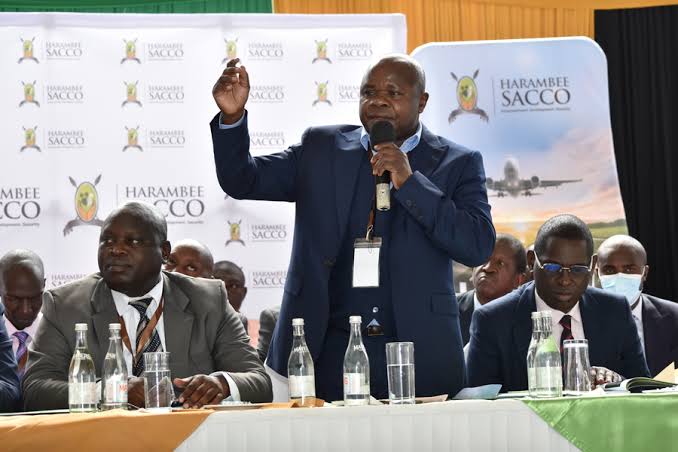
On its part, Harambee Deposit Taking Sacco is writing off Sh230.37 million linked to an unreconciled bank account, while continuing to treat over Sh42 million invested with Kuscco as fully impaired. It disclosed the losses in its audited financial statements for the year ended December 31, 2025, offering another glimpse into how the co-operative sector is still dealing with the fallout from the Kuscco financial scandal.

By John Oyuke
Kenya’s Savings and Credit Co-operative Organisations (Saccos) are under significant financial strain as non-performing loans (NPLs) climb to Sh65.3 billion, prompting massive financial provisioning and internal write-offs by major players.
The Sacco Societies Regulatory Authority (Sasra) data shows while the sector’s total assets have risen steadily to Sh1.25 trillion, a worsening trend in loan defaults is threatening liquidity and pushing many Saccos past the regulatory limits.
They indicate that the NPL ratio for deposit-taking Saccos reached 6.56 per cent, breaching the 5 per cent prudential ceiling in June this year. Non-withdrawable deposit-taking (NWDT) Saccos face an even higher distress rate at 7.99 per cent.
Sasra links the vast majority of the over Sh60 billion in bad loans directly to employers failing to remit statutory payroll deductions. It is estimated that Sh8 out of every Sh10 in unremitted Sacco funds consists of loan repayments that employers deducted from worker payslips but pocketed instead of forwarding.
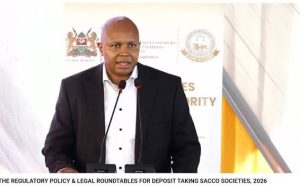
State agencies and county governments are the worst offenders, Sasra says, noting that by early this year, State agencies failed to remit over Sh51.9 billion in total statutory dues, with Sh9.21 billion directly owed to Saccos.
The multi-billion-shilling collapses of major co-operative entities like Kenya Union of Savings and Credit Co-operatives (Kuscco) and Metropolitan National Sacco have also significantly destabilised the country’s co-operative sector.
The cascading failures have forced numerous individual Saccos to absorb massive financial shocks, drastically spike their bad loan provisions, and execute heavy balance-sheet write-offs.
A forensic audit by PricewaterhouseCoopers (PwC) at Kuscco, exposed a Sh13.3 billion fraud scheme driven by falsified records, phantom profits, and extensive insider lending.
Liabilities peaked at roughly Sh17.7 billion against just Sh5.4 billion in recoverable assets, culminating in a voluntary liquidation vote. This collapse left at least 247 members Saccos fighting to salvage over Sh24.8 billion in at-risk deposits.
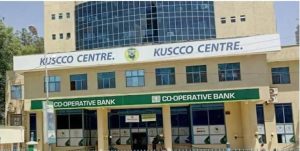
Declared technically insolvent with a negative equity gap of Sh12 billion, Metropolitan Sacco collapsed under the weight of an untraceable Sh50 billion loan book. Weak risk management and unauthorized payroll tampering resulted in a staggering 99 per cent loan default rate, triggering panic member withdrawals.
Following the financial downfall and subsequent voluntary liquidation of Kuscco, Sacco Societies Regulatory Authority directed 247 affected Saccos to recognise billions in impairment losses. However, this regulatory directive faced major pushback, culminating in a High Court ruling that quashed Sasra’s mandatory write-off guidelines due to a lack of public participation.
Despite this legal reprieve, nearly Sh7.76 billion in Kuscco exposure remains unprovided for across the sector, leaving individual Saccos with critical decisions regarding their financial reporting and capital preservation and are individually writing off over a staggered period of one to five years.
Major institutions have borne heavy hits as a result of Kuscco’s problems. For example, Sheria Sacco reported exposure of Sh126.8 million in deposits, Stima DT Sacco booked a Sh108 million impairment while Nyati Sacco has absorbed Sh90 million in losses.
Stima Sacco reported that its loan delinquency ratio (non-performing loans relative to total loans) rose to 6.7per cent for the full year 2025, up from 5.45 per cent in the previous year pointing at growing challenges around loan defaults and asset quality in the co-operative sector that forced it to completely impair and write off a Sh108 million investment.
On its part, Harambee Deposit Taking Sacco is writing off Sh230.37 million linked to an unreconciled bank account, while continuing to treat over Sh42 million invested with Kuscco as fully impaired. It disclosed the losses in its audited financial statements for the year ended December 31, 2025, offering another glimpse into how the co-operative sector is still dealing with the fallout from the Kuscco financial scandal.
The provision remained unchanged from the previous financial year, reflecting continued uncertainty over whether the funds will ever be recovered. It said, “Kuscco deposit savings held by the Society were fully provided at an amount of Sh42,024,896 both in the current and prior year.”
Harambee DT Sacco’s latest financial statements show that while its core operations continue to grow, the effects of historical accounting issues and the lingering Kuscco crisis are still weighing on its books.
According to the financial year ended December 31, 2025, Harambee DT Sacco recorded a delinquency ratio of 9.7 per cent on its net loan book of Sh34.28 billion, which translates to about Sh3.33 billion in bad loans (non-performing loans).
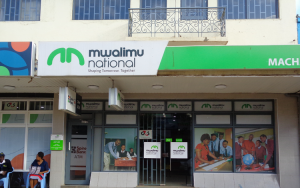
Also caught in these exact bad loans net is another giant Sacco, Mwalimu National Deposit-Taking Sacco which also wrote off Sh960.2 million as a net impairment charge on financial assets in 2005, a 5.3 per cent increase from Sh911.4 million in 2024 as part of a multi-year plan to clear legacy losses tied to its failed investment in Spire Bank.
The provision is part of an ongoing, regulator-approved six-year plan (2022–2027) to fully absorb approximately Sh8 billion in legacy losses arising from its failed investment in and eventual collapse of the bank.