BATUK training resumes despite Gachagua’s Sh3billion bribery claim bombshell
The licensing delay fuelled speculation over the future of the military partnership, a situation that intensified after former Deputy President Rigathi Gachagua alleged that BATUK had been asked to pay a Sh3 billion bribe to secure renewal of its operating licence.

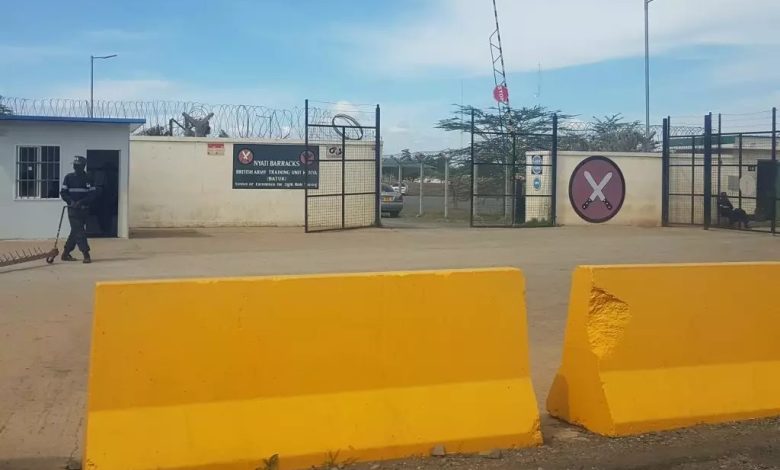
The government has today announced the resumption of joint military training between Kenya and the United Kingdom at the British Army Training Unit Kenya (BATUK) in Nanyuki, signalling that the two countries have resolved a standoff that had cast doubt over the future of the long-running defence partnership.
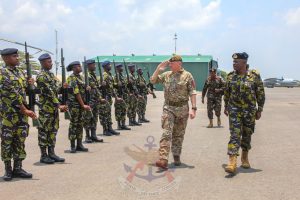
In a statement issued by Prime Cabinet Secretary and Foreign Affairs Cabinet Secretary Musalia Mudavadi, the government said the resumption of the exercises underscored the enduring relationship between Kenya and the UK, describing it as a partnership built on mutual respect, dialogue and shared strategic interests.
“The Kenya-United Kingdom defence partnership continues to advance Kenya’s national interests. It strengthens the capabilities of the Kenya Defence Forces, contributes to regional peace and security, supports Kenyan jobs and businesses, and provides significant economic benefits to the communities that host these activities,” Mudavadi said.
He added that Kenya remains committed to deepening defence cooperation with the UK while advancing joint efforts to promote regional peace, security and stability.
The announcement comes just days after uncertainty gripped the future of BATUK operations following reports that the 2026 edition of Exercise Haraka Storm—a six-week combat training programme involving British and Kenyan troops—would be conducted outside Kenya after authorities failed to secure the necessary licences.
The licensing delay fuelled speculation over the future of the military partnership, a situation that intensified after former Deputy President Rigathi Gachagua alleged that BATUK had been asked to pay a Sh3 billion bribe to secure renewal of its operating licence.
Speaking during a church service at St Teresa Catholic Church in Imenti Central, Meru County, on Sunday, Gachagua claimed members of the National Assembly’s Defence, Foreign Affairs and Intelligence Committee demanded the payment before approving the renewal of BATUK’s agreement.
“The chairman is called Nelson Koech. He told these whites, ‘For us to renew the contract, we want Sh3 billion,'” Gachagua alleged.
and it is the standard we will continue to uphold,” Koech said.
Mudavadi’s announcement now appears to have eased concerns over the future of the military partnership, indicating that both governments have resolved the licensing impasse through diplomatic engagement and paving the way for the continuation of joint military exercises at BATUK’s Nanyuki base.
According to the former Deputy President, British officials questioned the basis of the demand, asking whether the money was intended for legitimate government services or political purposes.
He claimed negotiations dragged on for nearly eight months before the British allegedly declined to make any payment, forcing them to relocate part of their military training programme to Mezama in Tanzania.
Gachagua further warned that any reduction in BATUK’s presence would have serious economic consequences for Nanyuki, where thousands of livelihoods depend directly and indirectly on the British military unit.
He noted that BATUK, which has maintained a presence in Kenya since the era of founding President Jomo Kenyatta, has played a key role in strengthening counter-terrorism cooperation between the two countries while supporting local businesses in Laikipia County.
His allegations sparked widespread debate over the future of the defence partnership, although neither the Kenyan government nor the UK Ministry of Defence publicly addressed the bribery claims at the time.
However, National Assembly Defence, Foreign Affairs and Intelligence Committee Chairperson Nelson Koech dismissed the accusations, insisting the licensing delay had nothing to do with corruption.
Instead, Koech said Parliament had raised concerns over the legal framework governing British troops operating in Kenya, including questions of legal jurisdiction, immunity and accountability.
He said the committee had spent two years investigating BATUK’s operations before tabling its report in the National Assembly in November 2025.
Among its recommendations were proposals to ensure Kenyan courts have jurisdiction over serious offences committed by visiting troops, mandatory cooperation with Kenyan criminal investigations and parliamentary inquiries, stronger environmental safeguards, welfare and child-support obligations, and enhanced protections for communities hosting military exercises.
The committee also cited unresolved concerns surrounding the 2012 murder of Agnes Wanjiru, which has been linked to British soldiers stationed at BATUK, alongside longstanding complaints from residents of Nanyuki and Laikipia over the unit’s activities.
Koech maintained that while Kenya values its strategic defence partnership with the UK for its contribution to military capacity building and counter-terrorism efforts, the relationship must be anchored on equality, accountability and respect for Kenyan sovereignty.
“But partnership must rest on equality, on respect for Kenyan law, and on genuine accountability. That is the standard the Committee has upheld, transparently and on the record,