Fresh fears as Ruto gets sweeping powers to declare national emergencies
However, while the new law is aimed at strengthening governance, environmental protection and equitable development across the country, some fear the new law could utilized for political expediency to declare national emergencies for political reasons as the county heads to next year’s General Election or in the event of nationwide protests to derail the push by the opposition and the Gen Z and their agitation for leadership change.

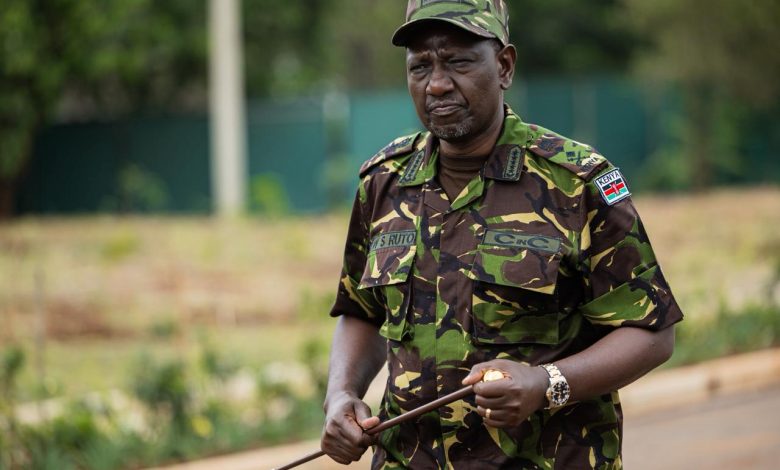
A new law to manage national disasters has raised concern for giving the president sweeping powers to declare a national state of disaster where circumstances require a coordinated response involving the national and county governments.
The National Disaster Risk Management Act 2023 allows the president to direct necessary interventions, including the mobilisation of resources and evacuation of affected populations, in order to safeguard lives and property during emergencies.
However, while the new law is aimed at strengthening governance, environmental protection and equitable development across the country, some fear President William Ruto could utilise it to declare national emergencies for political reasons as the county heads to next year’s General Election or in the event of nationwide protests to derail the push by the opposition and the Gen Z movement to dethrone him from power.
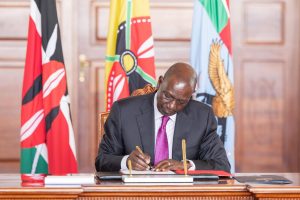
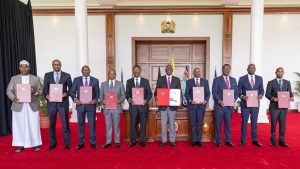
Speaking after the Bill was assented into law, Deputy Chief of Staff Josphat Nanok noted that establishes a comprehensive legal and institutional framework for disaster risk management through the creation of the National Disaster Risk Management Authority and county disaster risk management committees.
But it has not been lost to critics that its enactment on May 29, 2026 came at a time the government has been on the spotlight for allowing the United States to establish an Ebola isolation and treatment facility at the Laikipia Airbase sparking fears that the highly infectious diseases which broke out in the Democratic Republic of the Congo (DRC) could find its way into the country.
The law provides that in the event of a national disaster, the president may declare a National State of Disaster by notice in the Kenya Gazette and that it shall contain a concise statement of the reasons for the declaration and (b) the duration of the declaration.
The National State of Disaster shall lapse on the date specified in the notice declaring the national state of disaster and may be terminated by the President at any time before the lapse of the period or extended by the President, any time before the period specified under paragraph lapses.
During the subsistence of a declaration of a National State of Disaster, the President may make orders or the issue directives, concerning the release of any available resources of the national government including stores, equipment, vehicles and facilities; the release of personnel of a national state organ for rendering of emergency services; and the implementation of all or any of the provisions of a national disaster management plan that are applicable in the circumstances.
He could also order the evacuation to temporary shelters of all or part of the population from the disaster-stricken or threatened area if such action is necessary for the preservation of life; the regulation of traffic to, from or within the disaster-stricken or threatened area; the regulation of the movement of persons and goods to, from or within the disaster-stricken or threatened area; the authorisation of or direction to any person, or any class of persons, to render essential services of a type that that person, or a person of that class, is competent to provide and the provision of reasonable compensation in respect of services so rendered.
It further allows him to direct the regulation of the distribution, sale and availability of essential goods, services and resources; emergency procurement procedures; and the imposition of such penalties as may be specified for any contravention of or failure to comply with the provisions of the orders or any directions issued or conditions prescribed by or under the orders or regulations, which may include the confiscation of goods, property or instruments by means of which or in connection with which the offence has been committed, among other powers.
Interior Cabinet Secretary Kipchumba Murkomen has, however, defended the new law, saying it will shift government disaster response from reactive to proactive risk reduction, preparedness and resilience.
“The government remains committed to ensuring that lessons learned from recent tragedies translate into stronger prevention measures and more effective emergency response systems,” he said.
In an update on his Facebook page, President Ruto said that: “Assented to three critical Bills that will strengthen disaster response, protect our forests, and deliver equitable development to all parts of the country. The National Disaster Risk Management Bill establishes a legal framework for managing disasters more effectively and efficiently. By providing clarity on the handling of disasters in both national and county governments, the new law is central to averting disasters and addressing crises when they occur. The Act establishes the National Disaster Risk Management Authority and County Disaster Risk Management Committees, which will coordinate response, issue early warnings, and ensure resources reach people on time,” the update reads in part.
The same day, Saturday May 29, 2026, President Ruto also signed the Forest Conservation and Management (Amendment) Bill, 2025 into law to strengthen the legal and institutional framework governing the forestry sector, promoting conservation, sustainable forest management, climate-responsive forestry, and research.
“It also strengthens the Kenya Forest Service (KFS) and re-establishes the Kenya Forestry Research Institute (KEFRI) as the lead forestry research institution,” he added.
On the other hand, after assenting to the Bills into law, Ruto noted that the Equalisation Fund Appropriations Bill, 2025, now an Act of Parliament enhances devolution by fostering equitable development and addressing development discrepancies in marginalised counties.
The Act ring-fences Sh16.8 billion allocated to 34 counties to fund water, roads, health facilities, and electricity.
The funds go directly to special-purpose accounts, not the County Revenue Fund, to ensure it is used only for basic services in areas that have lagged behind in development.