Government issue travel warning after river Nyando broke its banks at Ahero bridge in Kisumu

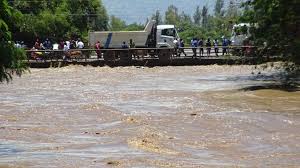
The government has this evening issued an urgent travel advisory restricting traffic flow through the overflown river Nyando at Ahero Bridge along the Kericho–Awasi–Kisumu Road, warning of dangerous conditions for motorists and other road users.
Speaking on behalf of the Multi-Agency Emergency Response Secretariat, government Spokesperson Isaac Mwaura said the river had burst its banks, with water levels continuing to rise and posing a serious risk, particularly at night.
“All motorists and road users along this route are advised to use alternative routes. Traffic to and from Kisumu should divert at Timboroa through Lesos to Kapsabet–Chavakali–Kisumu until the situation stabilises,” said Mwaura. He cautioned that darkness makes it difficult to assess the depth and force of flowing water, increasing the risk of accidents.
The government said it is closely monitoring the situation and will issue updates as necessary, urging the public to strictly adhere to safety advisories.
The alert comes amid a worsening flood crisis across the country that has so far claimed at least 81 lives and displaced thousands.
According to the Ministry of Interior and National Administration, 21 counties have been affected by the ongoing heavy rains.
Data released on March 22 shows that seven people remain missing, while 68,975 households have been displaced.
The hardest-hit counties include Nairobi, Kisumu, Narok, Kiambu, Migori, Siaya, Makueni, Busia, Wajir, Kisii, Homa Bay, Taita Taveta, Baringo, Kajiado, Kitui, Kwale, Machakos, Kericho, Embu, Tharaka Nithi and West Pokot.
The floods have caused widespread destruction of infrastructure, rendering roads and bridges impassable, disrupting power supply, and damaging water systems in several regions.
Residential areas, farms, markets, and businesses have been inundated, raising concerns over food security and livelihoods. Schools have also been affected, further compounding the humanitarian crisis.
Regionally, Nairobi has recorded the highest number of fatalities at 37, followed by the Eastern region with 21 deaths and the Rift Valley with eight.
The Nyanza region has reported seven deaths, while the Coast region has recorded five. The Central region has three fatalities, with no deaths reported so far in the Western region.
The government, working with the Kenya Red Cross Society and the National Disaster Operations Centre, is coordinating rescue operations, humanitarian assistance, and infrastructure restoration efforts.
Meanwhile, the Kenya Meteorological Department has warned that the country should brace for continued heavy rainfall, flash floods, and storm hazards as the long rains season intensifies.