2.5million Kenyans face starvation as drought persists

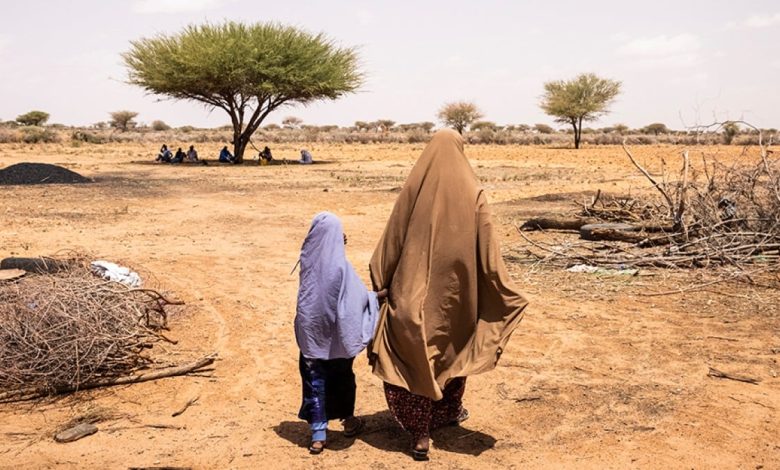
Two million Kenyans are staring down hunger as one of the worst droughts in over four decades grips the country, but the Kenya Meteorological Department says the March to May long rains are expected to bring meaningful relief after the short rains failed last year.
Kenya’s arid and semi-arid lands (ASALs) are expected to be worst hit with more pronounced drought conditions according to the Kenya Meteorological Department (KMD).
While the March–May long rains are predicted to bring some relief, ASAL areas are likely to receive average to below-average rainfall, insufficient to offset the existing deficits. This puts already drought-stricken regions under continued stress.
The department forecasts above-normal rainfall across central and western Kenya during the long rains, offering farmers and pastoralists in the country’s food basket regions cautious hope.
However, experts are warning that for the driest parts of the country, the long rains alone will not be enough to reverse the damage already caused by months of failed rainfall and depleted water sources.
Climate scientists are also watching for a possible shift from La Niña toward El Niño conditions between May and July 2026, which could bring even more rainfall to the region later in the year.
Acting KMD Director Edward Muriuki noted, “Even if ASAL areas receive average to above-average rainfall, it may not be enough to offset the deficit on the ground. These areas require far more than average rainfall to recover.”
Despite these challenges, the country’s key food-producing regions are expected to receive adequate rainfall, which offers some reassurance for food security.
Addressing participants at the 12th National Climate Outlook Forum, Dr Deborah Barasa, Cabinet Secretary for Environment, Climate Change, and Forestry, emphasised the need for comprehensive preparedness.
“This is a multifront challenge that will require concerted efforts across government agencies, international organizations, disaster risk organizations, and other disciplines to equip at-risk communities with climate information and advisory services, enabling better decision-making under variable and changing climatic conditions,” said Dr. Barasa.
The Kenya Red Cross Society has highlighted the dire situation in ASALs, particularly in areas that experienced failed rains in October–December 2025. Children under five, pregnant women, and lactating mothers are facing acute malnutrition and require urgent treatment.
For now, the Kenya Meteorological Department is urging communities to stay prepared, as the long rains remain the single most important weather event that could determine food and water security across the country.