Somali tycoon, Kenyan bank in Sh232billion Minnesota fraud probe

A Kenya based bank and a prominent Somali businessman who has established Kenya as his operational base are among high-profile individuals and entities under scrutiny in an ongoing U.S. Federal Bureau of Investigation (FBI) probe into a massive fraud scheme in Minnesota, USA, involving an estimated $18 billion (Sh232 billion) in stolen public funds, our investigations have established.
The bank in question has since changed its name and ownership to include foreigners, some drawn from Hargeisa, Somaliland.
The investigation has sent shockwaves through Nairobi’s booming real estate market, which authorities believe absorbed a significant portion of the illicit money.
The fraud, which targeted U.S. taxpayer-funded welfare, healthcare, housing, and childcare programmes, was allegedly orchestrated through fake organisations operating within Minnesota’s Somali diaspora.
The stolen funds were then laundered through complex international financial channels, with Kenya emerging as a key destination for the money.
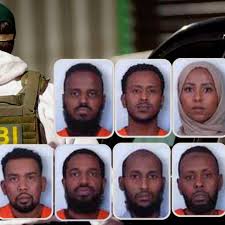
At the centre of the probe is a Somali tycoon, reportedly based in Mogadishu but increasingly using Nairobi and Hargeisa as his business hubs.
Investigators believe he invested billions of shillings in Kenya’s real estate sector, including luxury apartments, shopping malls, and commercial properties across prime neighbourhoods such as Westlands, Eastleigh, Lavington, Hurlingham, and South B and C. His interests are also said to extend into banking, forex trading, and commodities.
In a statement on Sunday, December 28, FBI Director Kash Patel revealed a strategic increase of personnel and investigative resources to Minnesota to target “large-scale fraud schemes exploiting federal programmes”.
The investigation has exposed a sophisticated network of sham vendors and shell companies used to steal over USD 250 million which was meant to feed hungry children during the COVID-19 pandemic.
“The FBI believes this is just the tip of a very large iceberg. We will continue to follow the money and protect children, and this investigation very much remains ongoing. Furthermore, many are also being referred to immigrations officials for possible further denaturalization and deportation proceedings where eligible,” Patel said.
So far, the investigation has produced 78 indictments and 57 convictions, with charges including wire fraud, money laundering, and conspiracy. Some defendants also attempted to bribe a juror with $120,000 (Sh15.4 million), highlighting efforts to subvert justice. Patel emphasised that ongoing cases are part of a broader prosecution strategy.
Kenyan national Abdiaziz Shafii Farah was sentenced to 28 years in prison in August 2025. In September 2025, his brother, Ahmednaji Maalim Aftin Sheikh, was indicted for conspiracy to commit international money laundering.
Sheikh allegedly laundered over Sh5.1 billion ($40 million) through Kenyan real estate, including a 20 per cent stake in a development company, an apartment building in Nairobi’s South C neighbourhood, and land in Mandera County.
Other individuals involved include Asha Farhan Hassan, charged in September 2025 with defrauding Minnesota’s Early Intensive Developmental and Behavioural Intervention autism services program of over $14 million (Sh1.8 billion) by submitting claims for services never provided. US court documents indicate that part of the funds were used to purchase real estate in Kenya.
Sources familiar with the investigation say the businessman holds shares through proxies in a Kenyan bank in question believed to be under the FBI’s radar.
Control of these assets is allegedly routed through offshore entities registered in multiple tax havens, complicating efforts to trace ownership. FBI agents stationed at the U.S. Embassy in Nairobi are reportedly preparing for the arrival of additional operatives tasked with tracking beneficiaries of the stolen funds and recovering the money, a priority publicly emphasized by U.S. President Donald Trump.
The revelations have triggered panic among Somali businessmen operating in Kenya who fear heightened scrutiny, asset seizures, and reputational damage. Court filings and federal briefings describe the Minnesota fraud syndicate as highly sophisticated, involving multiple actors operating across borders. Investigators now believe Kenya’s real estate market was one of the primary laundering vehicles, with high-end properties purchased as a means of cleaning illicit capital.
The probe has raised serious concerns about financial oversight in Kenya, particularly in relation to foreign capital inflows into the property sector. While Nairobi’s real estate boom has attracted investors from the Middle East and Asia, analysts warn that an influx of opaque funds may have inflated property prices, leading to oversupply and under-occupied luxury developments. The possibility that illicit money played a major role has intensified fears of a speculative bubble.
For Kenya, the implications are far-reaching. Increased regulatory scrutiny, tighter controls on foreign investments, and potential asset seizures could destabilise the sector and erode investor confidence. Beyond economics, the investigation carries political and reputational risks, potentially affecting Kenya’s standing as a regional investment hub.
As the FBI probe expands, Nairobi’s real estate market faces a critical loophole in the fight against transnational crimes like money laundering.
Earlier this week, former Deputy President Rigathi Gachagua sparked controversy after linking a mall in Nairobi’s Eastleigh area to massive fraud schemes in the United States.
In a quick rejoinder, Members of Parliament from North Eastern Kenya have accused former Deputy President Rigathi Gachagua of ethnic profiling and incitement, calling on the National Cohesion and Integration Commission (NCIC) to investigate what they describe as a targeted attack on the Somali community.
“My concern is with one individual who imported goods, like rice and sugar, that hurt farmers in Mwea and Western Kenya. It is wrong for politicians to use this personal issue to target an entire community,” Gachagua clarified.
Gachagua’s clarification comes after lawyers representing the owners of Business Bay Square (BBS Mall) in Eastleigh filed a complaint with the NCIC.