Impeachment or deal-making? Ruto’s claims reignite graft allegations against Governor Guyo
Revelation came weeks after governor was spared on what the legislators termed a technicality, even as rumours went round that the influence of money and political muscle in the high-stakes Senate proceedings

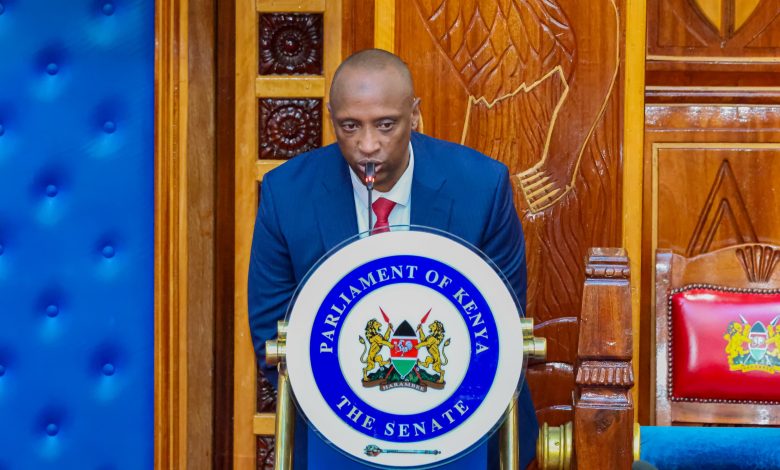
The Senate was recently placed in the spotlight by President William Ruto after revealing accusations that the legislators received Sh150 million to save Isiolo Governor Abdi Guyo from being impeached last month.
The revelation by the head of state during the joint broad-based MPs joint parliamentary group meeting revealed how the survival of impeached governors often comes down to deal-making rather than justice.
“I am a consumer of raw intelligence. The latest ‘soko huru’ in the Senate… where does someone find Sh150 million? Is that his money? That is money that belongs to the county!” President Ruto revealed.
This came weeks after Guyo was spared on what the legislators termed a technicality, even as rumours went round that the influence of money and political muscle in the high-stakes Senate proceedings.
Before the President’s revelations, multiple sources had shared that funds corruptly obtained by the governor were used to oil the Palms of Senators, ensuring that the motion failed to gain traction.
Adding to the allegations, there were claims that the Isiolo County Assembly was never involved in the budget-making process for the devolved unit, which was mysteriously published by the government printer without legal authorization.
Activists from the county claimed that Guyo wanted the budget printed and not passed by the Assembly because it contained disparities.
They stated that the budget became fraudulent based on the questionable disbursements that the county is planning to make in the current financial year, with a top government official being accused of receiving kickbacks from the transactions.
The activists have consistently called upon the Ethics and Anti-Corruption Commission (EACC) to initiate full-scale investigations, even though they have remained skeptical about whether justice will be served.
Sources privy to the information have claimed that the top national government officials were given their cut, preventing the governor from incurring legal consequences.
“The county is an ATM run by a network of cartels,” an administrator from the county claimed.
Investigations by The Informer Media Group also indicate that county financial records contains names of shadowy companies receiving payments.
None of the companies paid by the county are owned by residents.
The transactions are masked as legitimate payments for services and supplies, raising serious questions about the collision between high-ranking officials of the northeastern county, Nairobi contractors, and national government brokers.
Speaking last weekend, Governor Guyo, however, challenged President Ruto to table evidence that he gave Sh150 million to senators to avoid being impeached.
Guyo, who survived an impeachment in the Senate last month, warned that such allegations cannot remain at the level of political rhetoric.
Guyo urged the Head of State to present proof before the relevant parliamentary bodies instead of making sweeping statements.
“If he has evidence that there are senators who were bribed, he should table it before the Powers and Privileges Committee,” Guyo said.
“The committee will investigate, and if there are senators found culpable, then the necessary anti-corruption agencies will take action,” he added.
By throwing the gauntlet, Governor Guyo has now joined a growing list of leaders pressing the President to either present tangible evidence or withdraw the claims, a move that has reignited debate over parliamentary integrity, corruption, and the credibility of Kenya’s impeachment process.
While Ruto did not name specific senators or clarify which case he was referring to, his remarks have triggered political backlash.
Kiambu Senator Karungo wa Thang’wa accused the President of undermining the Senate’s independence, while other lawmakers warned that the Head of State could even be summoned over the claims.
The timing of the remarks has also raised eyebrows, with critics suggesting they were meant to influence the Senate’s looming impeachment trial of Kericho Governor Erick Mutai, whose impeachment hearing is scheduled between Wednesday and Friday, being the verdict day.
Mutai pleaded not guilty to three charges of gross violation of the Constitution, abuse of office, and gross misconduct, as the Senate opened hearings into his impeachment.
Since the advent of devolution, dozens of impeachment motions against governors have been tabled, but only a handful have succeeded.
Critics argue that procedural loopholes, political compromises, and lobbying have turned the Senate’s oversight role into a negotiation arena rather than a judicial process.