Cause for Saba Saba protests remains the same 35 years on amid generational shift

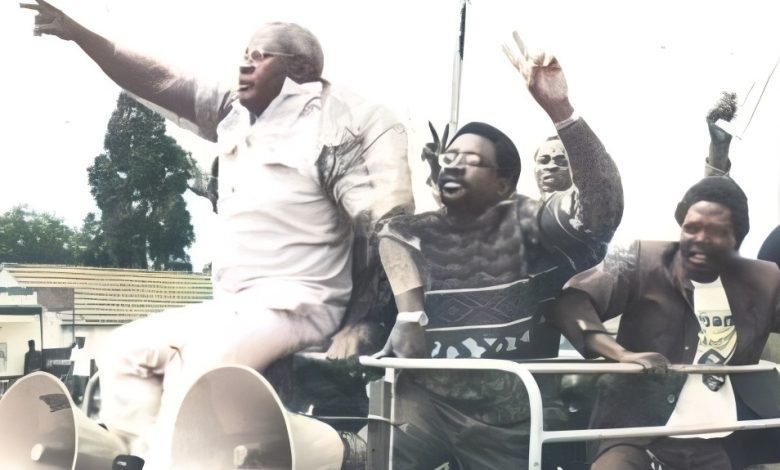
As Kenyans across the country gear up for the Saba Saba celebrations tomorrow, this year’s 35th fete has been marked by a generational shift from the proponents for the Second Liberation ushering in multipartyism in 1990 to the current clamour for good governance led the Gen Zs championed protests since June last year.
Despite the generational shift, the cause remains the same.
Leaders across the country have expressed their views on how the celebrations should be done.
While the Orange Democratic Movement (ODM) Party leader and former Prime Minister Raila Odinga has urged Kenyans to gather at the historic Kamukunji grounds to mark the day, a faction of Kenyans, including those allied to the Bunge la Mwananchi, have vowed to show up in the streets and peacefully protest.
While addressing the press today, Raila acknowledged that what was being fought for during the Sabasaba day has not been achieved.
“We have not achieved what Sabasaba intended. Violation of human rights is still a challenge in the country, police brutality is there, and the economy has not performed as we expected. Saba Saba was meant to bring people together for a common cause: change.”
The ODM leader said he will personally be at Kamukunji, the same grounds where pro-democracy activists gathered 35 years ago to demand multiparty democracy in the face of then-President Daniel Moi’s authoritarian regime.
On their part, Bunge la Mwananchi, led by their President Francis Awino, have vowed to be on the streets tomorrow to mark the day.
According to Awino, they’ll do it in honor of the second liberators of the country, whom he said, whatever they were fighting for, is yet to be achieved, and the country is not headed in the right direction.
“Sabasaba is an important day not just to Bunge la Mwananchi and the youth, but every member of the society and everyone in Kenya at the moment, because our country is not moving in the right direction. We are urging everyone to come out tomorrow and express themselves and remember our fallen soldiers who died liberating the country,” Awino said.
He urged businesspeople to close their businesses to avoid losses, as he blamed the government for planning to infiltrate peaceful protests with goons.
“I urge all businesspeople to close their businesses to avoid losses and blame. We urge everyone who will come out tomorrow to do it peacefully. We know the government will try to infiltrate the protest with goons, but we have already decided to be in the streets tomorrow. If you cannot come out, please watch us in the media as we try to express ourselves and what we want for our country,” he stated.
On his part, Siaya governor James Orengo has stated that the dream to make Sabasaba an official holiday was to be in the 2010 constitution before being weakened.
Orengo stated that the struggle that they started 35 years ago continues with Gen Z.
“The dream of Saba Saba was enshrined in the 2010 constitution. Before the ink dried, it was turned on its head, and every pillar of it weakened. Everything has not been spared, including now the separation of Church and State. So the struggle must continue; Mwakenya, Saba Saba, Genz on and on,” he has stated on his social handles.
This comes even as the Interior Cabinet Secretary Kipchumba Murkomen today urged the police to be gentle and protestors but ruthless with criminals.
Speaking in Meru County, the CS raised concerns over recent trends of violent protests where public property such as police stations and courts have been set on fire.
Murkomen noted that police conduct during the protests has been of public concern, even though they are not solely responsible for the anarchy.
“They say the police haven’t done this, the police haven’t done that. But those who bring us trouble and those who use violence to do politics are the ones destroying our country,” he said.
The interior minister further urged police to uphold professionalism in ensuring that the said protests are peaceful.
Every year on July 7, Kenya marks Saba Saba, a day deeply rooted in the country’s long struggle for democracy and political freedom.
What began in 1990 as a bold protest against the late President Daniel Arap Moi’s one-party rule has grown into a powerful symbol of resistance, citizen activism, and the ongoing fight for justice.
Saba Saba, meaning “Seven Seven”, represents the date July 7, and it serves as a strong reminder of the sacrifices made by Kenyans in the struggle for multiparty democracy.
In 1990, Kenya was operating under a de facto one-party system led by the late President Daniel Arap Moi through the Kenya African National Union (KANU).
Political dissent was banned, and press freedoms were severely restricted. Additionally, public frustration increased, driven by economic mismanagement and the marginalization of certain communities.
On July 7, 1990, opposition leaders Kenneth Matiba, Charles Rubia, and Jaramogi Oginga Odinga convened a rally at Kamukunji Grounds in Nairobi to demand the return of multiparty democracy.
However, the government banned the rally, and protesters defied the ban, which led to widespread unrest across the city.
During the protest, riot police violently dispersed demonstrators, resulting in arrests, detentions without trial, and deaths. The events of that day became a turning point in Kenya’s fight for democratic reforms.
The Saba Saba protests of 1990 marked a pivotal moment in Kenya’s democratic struggle, acting as a catalyst for multiparty democracy, putting immense pressure on President Moi’s regime.
This led to the repeal of Section 2A of the Constitution in 1991, allowing multiparty politics in Kenya.
The movement also emboldened civil society groups and youth activists, inspiring many to engage in political and governance debates. Over time, the day became a powerful symbol of people’s power and remains a key date for political reflection in Kenya.