President Uhuru’s Big Four Agenda at crossroads as tenure nears

President Uhuru Kenyatta’s goal of maintaining an upward growth the country’s economy through the ambitious Big Four Agenda seems elusive as only fewer set targets have been met.
However, with less than six months left of his tenure, the Big Four agenda projects are struggling to take shape.
Last month, a Chinese firm withdrew its workers from various projects in the country after eight vehicles worth more than Sh42 million, were burnt by suspected Al Shabaab militants in the Kwa Omolo-Bodhei area on the Lamu-Garissa highway.
According to the firm, works on the Lamu-Garissa-Ijara road will remain suspended until the government reassures them of their security.
“The construction of the road which is a critical section of the Lapsset project has been suspended after the company suffered losses,” the company said.
The fate of the Sh2.5 trillion Lamu port South Sudan-Ethiopia transport lapsset road projects in Lamu hangs in the balance as contractors fear for their safety.
The ambitious infrastructure project with several components that span three countries has been slowed down by the attack.
In 2018, the government launched the Universal Health Coverage (UHC), targeting to provide all 47 million citizens with affordable healthcare by 2022.
But recent contentious policy changes announced by the National Hospital Insurance Fund (NHIF) on claims settlement affecting private hospitals brought a standoff which will affect patients depending on the insurance.
The Kenya Association of Private Hospitals (KAPH) threatened that private hospitals countrywide will deny services to patients depending on NHIF.
“Come Monday, January 31, which marks the end of our seven-month extension of contract with NHIF, we, the private hospitals, won’t be in a position to offer services to patients depending on NHIF,” he said.
However, in a meeting between officials of the Ministry of Health, NHIF and stakeholders in the private and faith-based health sector, the private hospitals have agreed to continue offering medical service until new contracts are formulated.
According to NHIF, new contracts will take effect on July 1, adding that the parties will have by then standardized repayment plans beneficial to every party as well as patients.
NHIF Chief Executive Officer Peter Kamunyo said that the Fund had reached a temporary consensus to offer services after an extension of healthcare providers’ contracts until June.
“During this period the Fund shall undertake bi-weekly stakeholder engagements on the benefit package for a period of two months to end on 31th March 2022,” stated Kamunyo.
“This will further allow the formulation of the new regulations under the NHIF (Amendment) Act No. 1 of 2022 noting that the process requires a parliamentary sitting for approval.”
Further, the cost of UHC roll-out has been slowed down by a poor performing economy.
The success of the programme is dependent on improvement of health facilities in the counties and employment of more health workers yet the government has frozen employment as one of the measures to control public spending.
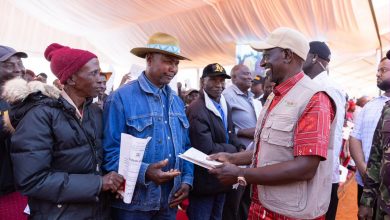
On food security, recently estimated 2.5 million Kenyans are facing starvation due to drought affecting harvests after poor rains.
Public Service Cabinet Secretary Margaret Kobia announced a plan by the government to buy from farmers 76,667 livestock that are considered weak and which will be slaughtered for distribution as relief food in a joint venture between the Ministry of Public Service, Ministry of Defense, Kenya Meat Commission and the Kenya Red Cross Society.
She additionally, singled out initiation of programmes such as irrigation projects through drilling of boreholes and a drought fund that allows the establishment of income generating community projects among others.
Cash transfers to stimulate the economy in the drought-affected counties, she further revealed that the State has shifted from food distribution to cash transfers to help curb pilferage and ensure decency.
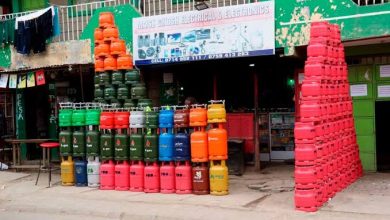
The fourth agenda, manufacturing, is currently taking a hit from high operating costs, high electricity costs and a heavy taxation burden.
To many taxpayers, the Big Four is the reason the tax load got heavier in the current financial calendar with the Treasury introducing new measures, including the controversial value-added tax on petroleum products.
The Big 4 Agenda seeks to increase the GDP contribution of the sector to 15 per cent by 2022.
Kenyatta’s legacy projects are also facing more implementation challenges as the National Treasury has diverted borrowed resources to fund pressing government operations.
Controller of Budget (CoB) Margaret Nyakang’o flagged the emerging trend in the National Budget Implementation Review report for the first quarter (July-September) of the 2021/2022 fiscal year.
The report dated October 2021, shows of the allocations, 10 key sectors under the General Economic and Commercial Affairs (GECA) sector — which is a significant player in job and wealth creation — industrial development, investments and trade promotion, tourism development, savings mobilisation and cooperative development, regional integration and development received the lowest budgetary allocation in the fiscal year 2021/22.
According to the report the government’s non-alignment of budget allocations of the sectors to the ‘Big Four Agenda’, delays in settlement of pending bills and failure by the National Treasury to adhere to the Ministries, Departments and Agencies (MDA) cash plans and forecasts when disbursing funds hindered effective budget implementation during the three months to September 30, 2021.
According to the report, all sector programmes and budget allocations should be aligned according to sector functions to realise the ‘Big Four Agenda’.