333 days to polls: Opposition scrambles for Ruto challenger
Gachagua throws Sifuna bombshell into succession race as Kituyi exposes cracks in unity plan

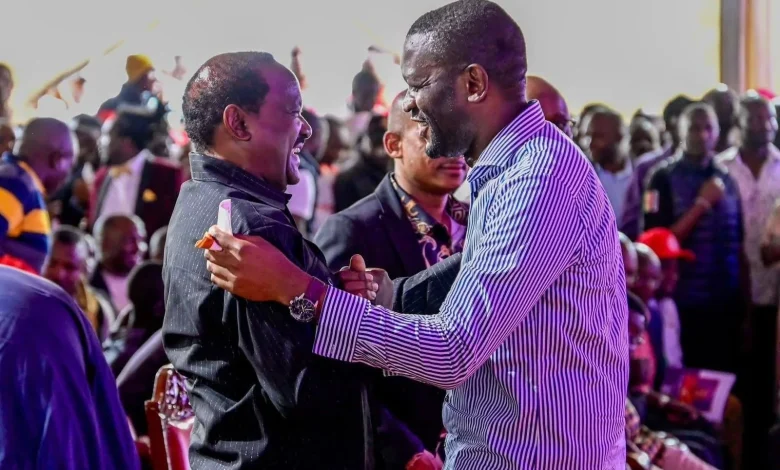
With only 333 days to the 2027 General Election, the opposition’s much-touted quest to produce a single candidate to face President William Ruto remains deeply unsettled, with competing ambitions, rival power bases and disagreements over the coalition’s architecture threatening to derail the search.
Settling on a joint opposition candidate to challenge Ruto remains fluid, with a number of plausible contenders already positioning themselves for the coveted ticket.
The opposition has publicly embraced the need to unite behind one candidate, but the question of who should carry the joint flag, how the candidate should be picked and when the announcement should be made remains unresolved.
The uncertainty was given fresh impetus by former Deputy President Rigathi Gachagua, who has signalled that he is willing to work with Nairobi Senator Edwin Sifuna and could even accept the running-mate position if the former ODM Secretary-General emerges as the stronger candidate.
Gachagua’s position, made during his ongoing tour of the United States, could significantly reshape calculations within the United Opposition, where several leaders have presidential ambitions and each political formation is seeking a favourable position in the eventual coalition.
Gachagua, who leads the Democracy for Citizens Party (DCP), has maintained that the opposition should not rush to unveil its presidential candidate, arguing that an early announcement would give the Ruto administration sufficient time to undermine the eventual challenger.
He has indicated that the opposition could make the decision as early as March next year, setting the stage for a potentially intense period of negotiations in the months ahead of the August 2027 election.
But the delay has also fuelled anxiety among opposition supporters and exposed what former Minister Mukhisa Kituyi describes as fundamental organisational problems within the United Opposition.
Kituyi, who was appointed spokesperson and head of the United Opposition secretariat before quitting the position and joining Sifuna’s Linda Mwananchi movement, has disclosed that attempts to establish a joint secretariat failed after constituent parties opted to continue operating independently.
He said the opposition had even paid a deposit for office space before the arrangement collapsed.
“When I was designated spokesperson of the opposition and head of secretariat, I set about trying to establish a secretariat,” Kituyi said in an interview with Citizen TV.
“But all the constituent parties of the united opposition preferred to run their business at their party secretariats… So this effort failed.”
According to Kituyi, the difficulties go beyond the question of office space, touching on the coalition’s ability to formulate a common political programme and present a coherent alternative to the Kenya Kwanza administration.
He said opposition leaders have struggled to agree on common positions, develop a joint manifesto and establish a political line-up capable of presenting a credible national alternative.
Kituyi further suggested that some leaders have been more enthusiastic than others about building the opposition platform.
“Some people, particularly Matiang’i, Karua and Orengo have been very, very positive about this… others not so enthusiastic,” he said.
His assessment has injected fresh urgency into the opposition unity debate, particularly as the political clock continues to run down.
Kituyi warned that although there is broad agreement among opposition leaders on the importance of unity, there is no corresponding agreement on how that unity should be constructed.
“There are still fundamental problems with what the architecture of unity is. There is a unanimous agreement on the importance of unity, but I don’t think there is agreement on the building blocks of that unity,” he said.
Kalonzo remains a major contender
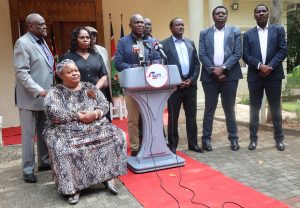
Within the United Opposition, Wiper leader Kalonzo Musyoka remains one of the strongest possibilities for the presidential ticket.
Kalonzo brings decades of national political experience, a long-established political network and previous experience as a presidential candidate and running mate.
One possible formula would see Kalonzo secure the presidential ticket and be deputised by either former Interior Cabinet Secretary Fred Matiang’i or Gachagua.
The calculations around Gachagua, however, could depend partly on the outcome of his legal battle over his impeachment and whether he is cleared to contest or allowed to continue with his political ambitions while the case proceeds.
Gachagua’s influence cannot easily be dismissed. His political strength in the Mt Kenya region, which remains one of the largest voting blocs in the country, gives him considerable leverage in negotiations over the opposition ticket.
Another possibility is for Martha Karua to once again become the preferred Mt Kenya representative in a presidential line-up.
Karua is viewed by some opposition strategists as a less divisive and more acceptable figure who could consolidate support in the region without generating some of the resistance associated with more combative political personalities.
Sifuna factor changes calculations
The emergence of Sifuna as a possible presidential contender has complicated the traditional opposition succession calculations.
The Nairobi senator has built a significant following among young people and urban voters after breaking ranks with the ODM faction led by Oburu Oginga over the party’s decision to remain in the broad-based government and support Ruto’s re-election after the death of former opposition chief Raila Odinga last October.
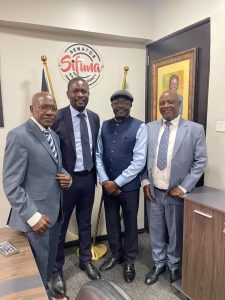
Sifuna has positioned himself around issues that resonate strongly with younger voters, including the high cost of living, abductions, alleged extrajudicial killings and government policies that have generated public discontent.
His ability to attract support beyond traditional party and ethnic structures has prompted speculation that he could emerge as a compromise candidate capable of energising voters who participated in the 2024 Gen Z-led protests.
Yet the youth vote remains a major uncertainty.
Although Gen Zs are expected to play a significant role in determining the outcome of the 2027 election, the absence of a formal political structure following the 2024 protests could make it difficult to translate online influence and street mobilisation into an organised electoral force.
Should Sifuna opt to seek the presidency, he could still partner with Kalonzo, Matiang’i, Gachagua, Karua or Kiharu MP Ndindi Nyoro, depending on the eventual coalition arithmetic.
Uhuru’s shadow over opposition calculations
Retired President Uhuru Kenyatta is also expected to remain an influential figure in the opposition realignment, even if he continues to operate largely behind the scenes.
One emerging scenario is the possibility of several presidential contenders regrouping under a rebranded Azimio coalition, with Uhuru playing a central role in organising the opposition and influencing the eventual choice of candidate.
Under such an arrangement, Kalonzo could emerge as the presidential candidate with Matiang’i as his running mate, or the two could swap positions depending on the negotiations.
Linda Mwananchi could also find a political home within a broader Azimio arrangement if it secures formal registration, with Sifuna potentially becoming either the presidential candidate or running mate to Kalonzo or Matiang’i.
Siaya Governor James Orengo, who has recently entered the presidential race, could become another important player in these negotiations, particularly given his experience and longstanding position within opposition politics.
For Nyoro, meanwhile, it remains too early to determine precisely how much influence he will wield in the presidential contest as he promotes the People’s Party of Kenya across the country.
Horse-trading or fragmentation?
Political observers believe the opposition could ultimately follow several paths.
The first is a negotiated horse-trading arrangement in which the major political forces agree on a presidential candidate and distribute the running mate, parliamentary positions and other coalition responsibilities according to their respective electoral strength.
The second is a broader alliance bringing together the United Opposition, Linda Mwananchi and other emerging formations under a rebranded Azimio framework.
The third—and potentially most damaging—is fragmentation along ethnic, regional and political kingpin lines.
Such a split could see individual leaders pursue separate presidential bids, potentially dividing the anti-Ruto vote and handing the incumbent an advantage.
Makueni Senator Dan Maanzo, however, has dismissed concerns about divisions as “state propaganda”, insisting that the opposition remains united and will eventually produce one candidate.
Gatanga MP Edward Muriu has similarly maintained that the coalition will unveil its candidate at the appropriate time.