Why global oversight of Uganda’s election is key as East African democracy narrows

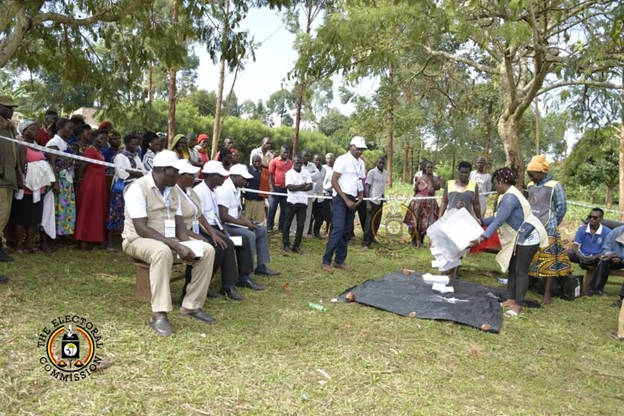
The just concluded Uganda’s presidential and parliamentary election is more than a national political contest.
As vote tallying continues, it is a a defining test for democracy in the East African Community (EAC), a region where civic space is steadily shrinking and authoritarian reflexes are becoming normalised. In this context, robust global oversight of Uganda’s electoral process is not external interference, rather, it is a democratic necessity.
For nearly four decades, Uganda has been governed by President Yoweri Museveni, whose rule has evolved from liberation-era legitimacy into a highly centralised system sustained by security control, legal manipulation and institutional fatigue.
Elections have continued to be held, but their credibility has been repeatedly questioned by opposition groups, civil society, regional observers and international partners.
Although concerns have been voiced over alleged voter fraud, internet shutdown, massive biometric kit failures and claims of ballot stuffing, the stakes are higher than ever, not just for Ugandans, but for the democratic trajectory of the entire EAC.
The warning signs are familiar. Opposition leaders face harassment, arrests and restrictions on movement. Media outlets operate under constant threat of closure, suspension or punitive regulation. Civil society organisations endure onerous registration requirements, audits and surveillance. Internet shutdowns and social media restrictions have become standard tools of electoral management. These are not isolated incidents, instead, they are components of a system designed to narrow political competition while maintaining the appearance of electoral order.
In such an environment, domestic oversight alone is insufficient. Uganda’s institutions, notably the Electoral Commission, courts and security agencies operate under overwhelming executive influence.
While the law provides for independence, practice tells a different story. When referees are perceived to be partisan, the legitimacy of the outcome is compromised before the first vote is cast. Global oversight becomes essential not to decide winners, but to protect process integrity.
The argument for international observation is often dismissed by incumbents as neocolonial intrusion. But this framing is misleading. Uganda, just like Kenya and other many countries, is a signatory to multiple regional and international treaties that commit it to democratic governance, including the African Charter on Democracy, Elections and Governance and the EAC Treaty itself. Inviting credible observers is not a concession; it is an obligation freely undertaken.
More importantly, Uganda’s election will set a precedent for its neighbours. Across the EAC, democratic space is tightening.
In Tanzania, political reforms have been tentative and reversible. In Rwanda, elections are tightly controlled within a dominant-party framework. In South Sudan, elections remain perpetually postponed. Even in Kenya, long viewed as a regional democratic anchor, institutions are under strain and electoral trust remains fragile. If Uganda conducts another disputed election without meaningful consequences, it signals that managed democracy is the acceptable regional standard.
Kenya’s 2027 general election comes at a moment when democratic norms in the region are under pressure. Uganda and Tanzania’s experiences are cautionary tales for Kenyan institutions, political actors, and citizens. Kenya, which has a relatively robust constitutional framework and an engaged judiciary and media, cannot take the integrity of its processes for granted.
Without vigilant oversight and domestic accountability mechanisms, Kenya could see similar erosions of democratic space marked by partisan use of state resources, restrictions on media freedom, intimidation of opposition campaigns, or digital blackouts under the pretext of security. Kenyan civil society and political stakeholders should push for pre-election adjudication mechanisms, transparent electoral reforms, and guarantees of free expression and assembly with international partners ready to observe, report, and support credible processes.
Needless to say, global oversight plays a critical deterrent role. The presence of international observers from the African Union, United Nations, European Union and reputable civil society networks raises the political cost of overt manipulation. It shines a spotlight on pre-election abuses that often go unreported once polling day passes. It also provides independent documentation that becomes vital when disputes arise, preventing the rewriting of events after the fact.
Critically, oversight must go beyond election day. Too often, observation missions arrive late, focus narrowly on voting logistics, then issue cautious statements that legitimise deeply flawed processes.
In Uganda’s case, meaningful oversight must begin months before polling, tracking voter registration, campaign freedoms, media access, use of state resources and security force conduct. It must continue through tallying, dispute resolution and post-election reprisals.
For the EAC, Uganda’s election is a mirror. A region that aspires to economic integration cannot afford political instability rooted in illegitimate governance.
Electoral disputes spill across borders through refugee flows, security tensions and economic disruption. Democratic backsliding in one member state weakens the collective credibility of the bloc and undermines its ability to negotiate globally as a community of shared values.
There is also a generational dimension. Uganda has one of the youngest populations in the world, yet one of the oldest political leaderships. Persistent electoral exclusion breeds frustration, radicalisation and disengagement. When peaceful change appears impossible, instability becomes more likely. Global oversight cannot manufacture democracy, but it can help keep open the channels for non-violent political competition.
However, it is instructive to note that international observers will not save Uganda’s democracy, only Ugandans can do that. But the global community has a responsibility not to look away as democratic space closes. Silence enables repression. Indifference emboldens manipulation. Oversight, even when imperfect, affirms that democratic standards still matter.