Cabinet orders DCI probe into suspected Sh6.2 billion government payroll fraud
"The DCI should recover lost public funds and ensure the immediate arrest and prosecution of all persons found culpable," the cabinet dispatch stated.

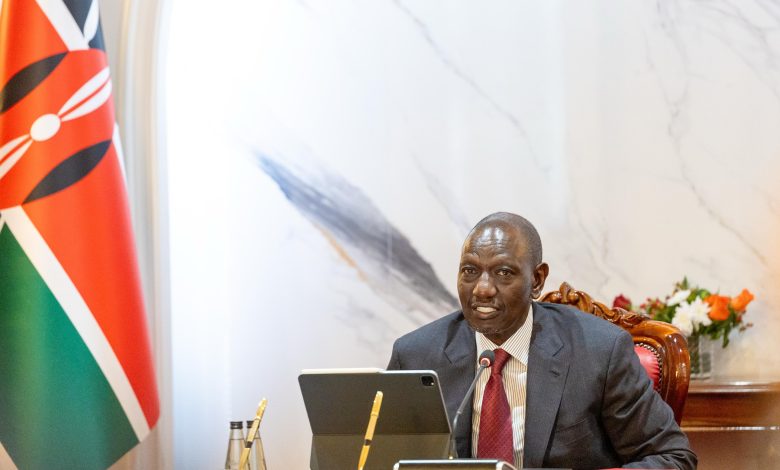
The Cabinet has directed the Directorate of Criminal Investigations (DCI) to investigate suspected payroll fraud amounting to Sh6.2 billion after a government audit uncovered widespread irregularities in payroll management across State departments.
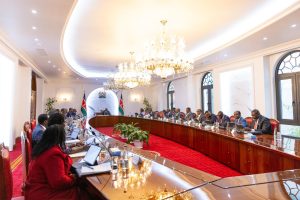
The directive was issued during a cabinet meeting chaired by President William Ruto at State House, Nairobi, today, Tuesday, June 30, 2026 following the presentation of findings from a comprehensive payroll audit that exposed serious governance and control weaknesses in the public wage system.
According to the Cabinet, a sample audit covering 12 of the country’s 53 State Departments uncovered suspected payroll irregularities valued at Sh6.2 billion.
The review identified unauthorised alterations to payroll records, irregular salary payments, weak controls over statutory deductions, fragmented payroll management systems and significant oversight gaps that created opportunities for fraud.
Cabinet ordered the DCI to launch a full-scale investigation into the suspected payroll fraud, verify personal numbers used in payroll processing, dismantle criminal networks manipulating government payroll systems, recover stolen public funds and ensure the immediate arrest and prosecution of all those found culpable.
“The DCI should recover lost public funds and ensure the immediate arrest and prosecution of all persons found culpable,” the Cabinet dispatch stated.
Alongside the criminal investigations, the Cabinet approved sweeping reforms aimed at strengthening payroll governance and eliminating leakages in public wage expenditure.
The reforms include the mandatory migration of all Ministries, Departments, Agencies (MDAs) and State Corporations to an upgraded Integrated Human Resource and Payroll System.
The revamped platform will incorporate enhanced cybersecurity measures, payroll data validation mechanisms and a disaster recovery framework, while being integrated with broader public financial management systems to improve oversight and accountability.
In a separate cost-cutting measure, the Cabinet suspended the leasing or hiring of additional government office space pending a comprehensive audit of existing office utilisation across government institutions.
The government said the move is intended to reduce expenditure by maximising the use of existing public buildings and prioritising renovation over new leases.
The cabinet also approved several major infrastructure and social development projects aimed at improving public service delivery and supporting long-term economic growth.
Among them is the Sh26 billion Judicial Performance Improvement Project Phase II, which will finance the construction of a new Supreme Court complex, a dedicated Court of Appeal building, a consolidated tribunals and judiciary administration complex, and a modern Kenya Judiciary Academy.
The CSs also approved an additional Sh16.6 billion for the completion of the Mwache Multipurpose Dam in Kwale County.
According to the Cabinet, the project will supply 186,000 cubic metres of water daily to Mombasa and Kwale counties upon completion, easing chronic water shortages, supporting domestic and industrial consumption, expanding irrigation and strengthening climate resilience.
“Once complete, the dam will supply 186,000 cubic metres of water daily to Mombasa and Kwale counties, easing chronic water shortages, supporting households and industry, expanding irrigation, strengthening climate resilience and securing reliable water for millions,” the Cabinet said.
The Cabinet further approved additional financing for the 67-kilometre Modogashe-Samatar road and the 76-kilometre Rhamu-Mandera road sections under the 750-kilometre Isiolo-Mandera transport corridor to accelerate completion of the strategic highway.
In the health sector, ministers approved the Sh4.5 billion Mother-and-Child Lifeline Initiative to expand maternal and neonatal healthcare services through the construction of 10 Level 4 and Level 5 mother-and-child hospitals.
The facilities will be built in Magadi Road (Nairobi), Galmagalla in Fafi (Garissa), Siakago (Embu), Kisumu County Referral Hospital, Kabichbich (West Pokot), Huruma (Uasin Gishu), Tudor (Mombasa), Bahati (Nakuru), Samburu (Kwale) and Chebunyo (Bomet).
Cabinet also approved the second phase of the Kenya-Austria Mother and Child – Our Future Project worth Sh7.8 billion to further modernise maternal and neonatal services at Kenyatta National Hospital.
“Together, the initiatives will expand specialised healthcare, strengthen the health workforce and improve outcomes for mothers and newborns,” the cabinet dispatch said.