Not all rosy for Ruto, Raila as 64 per cent opposed to broad-based government pact, TIFA survey shows
At the same time, the survey show majority of Kenyans still believe the country is headed in the wrong direction despite a drop in the percentage in the latest Tifa poll

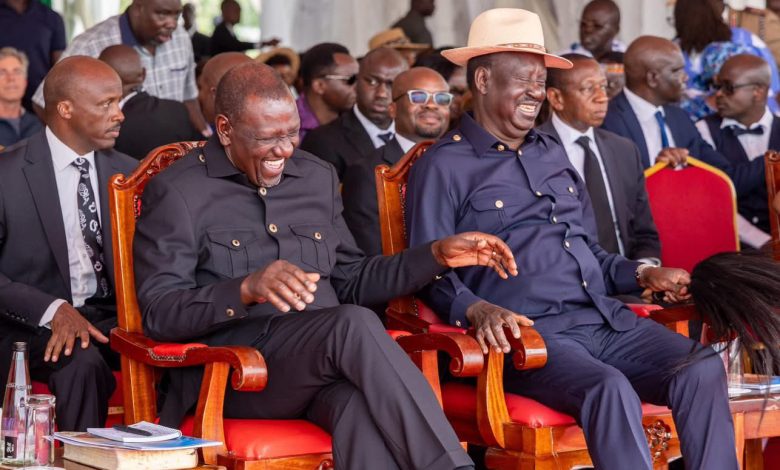
The percentage of Kenyans opposing the broad-based government arrangement pact between President William Ruto and ODM leader Raila Odinga has increased from 54 per cent in May 2025 to the current 64 per cent currently.
The significant 10 per cent rise of those opposed to the Ruto-Raila deal in just less than three months has a commanding lead from the vote rich Mount Kenya region with 85 per cent, Nairobi with 74 per cent comes second while the South Rift has 72 per cent and Raila’s Nyanza backyard trailing at 71 per cent.
At the same time, the survey show majority of Kenyans still believe the country is headed in the wrong direction despite a drop in the percentage in the latest Tifa poll.
The poll by Trends and Insights for Africa (TIFA Research) shows 62 per cent of Kenyans said the country is moving in the wrong direction, compared to 75 per cent recorded in May 2025.
This is a 13 per cent drop in percentage compared to the survey conducted four months ago.
Despite the decline in negative sentiment, the proportion of Kenyans who view the country’s direction positively has hardly shifted.
Fifteen per cent said Kenya is headed in the right direction, a marginal rise from 14 per cent in May.
Instead, the decline in pessimism is explained by the increase in those who believe the country is in neither the right nor wrong direction, which rose from 9 per cent in May to 18 per cent currently.
Those unsure or without an opinion also increased from 2 per cent to 5 per cent. TIFA noted that “despite continuing economic stress, somewhat fewer Kenyans now consider the country’s direction as wrong as compared with the figure obtained in TIFA’s May survey (62 per cent vs. 75 per cent).”
The research firm added that the rise in the “neither right nor wrong” category is the main factor accounting for the fall in negative views.
The survey, conducted between August 23 and September 3, 2025, covered a nationally representative sample of 2,023 respondents across nine zones: Central Rift, Coast, Lower Eastern, Mt Kenya, Nairobi, Northern, Nyanza, South Rift, and Western.
Data was collected through face-to-face interviews conducted mainly in Kiswahili and English. The poll has a margin of error of +/- 2.17 per cent.
The Finance Bill is perceived as having negatively affected the cost of living and eroding personal finances for most Kenyans, with 82 per cent saying it led to Increased cost of basic goods and services such as food, transport and utilities.
31 per cent say it has increased taxes on their salaries or income. 21per cent say the most recent finance bill has reduced their disposable income or savings.
The report further highlights that every one in four Kenyans is jobless with 17 per cent either unemployed or job hunting. 25 percent are working full time, 23 per cent self-employed and with 15 per cent working part time
73 per cent of Kenyans polled do not think that the government is doing enough to investigate and stop extra-judicial killings and abductions.
The poll further shows that 64 per cent of Kenyans interviewed between August and September this year overwhelmingly feel that their personal and family economic conditions have deteriorated since the last general election compared to 54 per cent who were interviewed in May.