Climate disruptions hit 1.9 million Kenyan learners
Data from the Kenya National Bureau of Statistics (KNBS) shows that about 18.4 million learners were enrolled across the four levels in 2025—3.12 million in pre-primary, 8.23 million in primary, 3.70 million in junior secondary and 3.34 million in secondary schools.

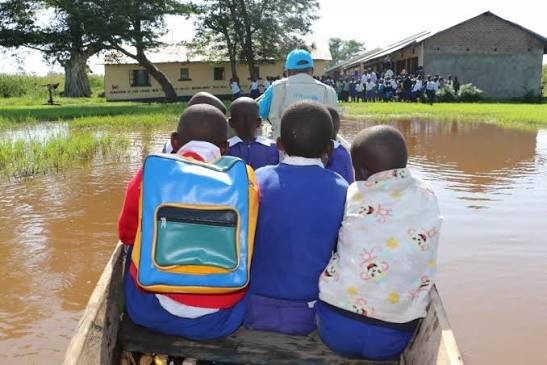
An estimated 1.9 million Kenyan learners had their education disrupted by climate-related hazards in 2025, with drought emerging as the biggest threat, according to a new UNICEF report.
The figure represents roughly one in every 10 learners enrolled from pre-primary to secondary school in Kenya.
Data from the Kenya National Bureau of Statistics (KNBS) shows that about 18.4 million learners were enrolled across the four levels in 2025—3.12 million in pre-primary, 8.23 million in primary, 3.70 million in junior secondary and 3.34 million in secondary schools.
The UNICEF analysis, Learning Interrupted: Global Snapshot of Climate-Related School Disruptions in 2025, examined data from 106 countries and territories and found that more than 171 million students globally, equivalent to one in 10 children of school age, had their education interrupted by climate hazards.
The disruptions included school closures, damaged classrooms, reduced attendance, shortened instructional time, shifts to remote learning and increased risks of children dropping out.
“For millions of children, climate hazards do more than disrupt lessons, they destroy schools, uproot families, and push the most vulnerable children, especially girls, out of the classroom for good,” UNICEF Executive Director Catherine Russell said.
Storms were the leading cause globally, affecting 109 million students, while floods disrupted the education of at least 70 million and heatwaves affected about 50 million.
UNICEF warned that the figures are likely conservative because long-term hazards such as drought are more difficult to measure than sudden disasters such as floods and storms.
Africa accounted for some of the largest numbers of affected learners. Niger recorded about 4.07 million, South Sudan 3.8 million, Malawi 3.32 million and Somalia about 1.54 million affected students.
In South Sudan, UNICEF said 2.8 million school-age children are already out of school, while more than half of schools lack safe classrooms, trained teachers, water and sanitation facilities.
The report said three-quarters of students affected globally live in low- and lower-middle-income countries, where education systems often lack resources to protect learning during climate emergencies.
Pakistan recorded one of the largest disruptions, with severe monsoon floods in August delaying the return to school for more than 28 million students. Egypt also suspended classes nationwide for a day after a powerful Khamsin wind and dust storm in April, affecting more than 28 million learners.
UNICEF said 40 countries experienced multiple climate-related school disruptions during 2025.
In Madagascar, drought, tropical cyclones and floods disrupted learning for about 280,000 students, while storms in Spain’s Valencian Community affected more than 500,000 learners.
The agency warned that without stronger climate-resilient education systems, increasingly frequent extreme weather events could deepen learning losses and widen inequalities, particularly for vulnerable children and girls.