Education and national security among big gainers as Mbadi presents his first budget
Teachers Service Commission will get the lion's share after being allocated for Sh387.2 billion

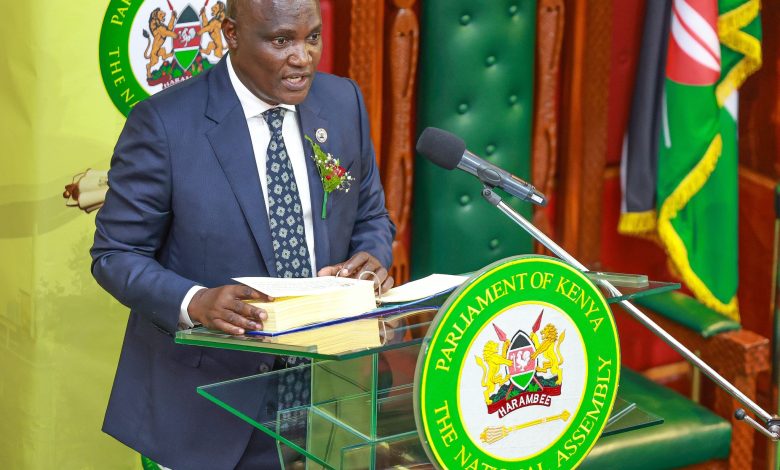
National Treasury Cabinet Secretary John Mbadi has unveiled the 2025/26 Sh4.29 trillion budget, the first under the Raila-Ruto broad-based government, aligning with the Bottom-Up Economic Transformation Agenda (BETA).
Among the key sectoral allocations are for education, which remains the highest funded sector, receiving Sh702.7 billion up from Sh658.4 billion in 2024/25 financial year, which marks an increase of Sh44.5 billion that would cover almost 30 per cent of the total budget.
The Teachers Service Commission will get the lion’s share after being allocated for Sh387.2 billion, mainly for salaries of teachers, instructors, and lecturers.
Other investments target free primary and secondary education, and university scholarships, together with the development and expansion of educational facilities.
In the national security sector, Ksh 464.9 billion has been allocated to support operations of the National Police Service, Defense, the National Intelligence Service and Prison Services.
This is a Sh87.4 billion increase from the current fiscal year, as Sh125.7 billion will go to the National Police Service and a further Sh51.4 billion to the National Intelligence Service.
Internal Security and National Administration will get Sh32.5 billion while the correctional department (Prison Services) has been allocated Sh38.1 billion.
CS Mbadi has proposed Sh10 billion to cater for the leasing of police motor vehicles and Sh3.6 billion for the police modernisation programme.
To combat crime and enhance the administration of justice, the government has proposed the allocation of Sh1.2 billion for the construction and modernisation of National Forensic Facilities.
The health sector follows with Sh133.4 billion, supporting Universal Health Coverage (UHC), emergency and chronic illness care, and critical infrastructure like the Kenyatta National Hospital and Moi Teaching and Referral Hospital.
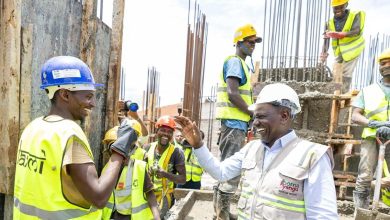
To address unemployment and promote affordable housing, Sh120.2 billion has been allocated to Housing and Urban Development, including Sh64.5 billion for affordable housing units and Sh13.4 billion for the Kenya Urban Support Programme.
Sh217.3 billion will be spent on expanding national infrastructure such as roads, rail, and ports.
The allocation is divided into Sh115.6 billion for maintenance of roads, Sh70.8 billion for rehabilitation of roads, and Sh30.9 billion for construction of roads and bridges.
This is an increase from last year’s allocation of Sh193.4 billion.
The government has also proposed Sh37.1 billion for rail transport and infrastructure, Sh600 million for the Kenya Ferry Ramp in Mombasa, and the acquisition of ferries for Lake Victoria and Sh300 million for the Nairobi Bus Rapid Transport Project.
The construction of airstrips and expansion have been allocated Sh300 million and Sh300 million for the promotion of the e-mobility project.
Agriculture, a cornerstone of BETA, has been allocated Sh47.6 billion, slashed from Sh54.6 billion in the current financial year.
Key initiatives include the Fertilizer Subsidy Programme, which will maintain its Sh18 billion budget for the ending fiscal year, the National Agricultural Value Chain Development Project (NAVCDP), which will receive Sh10.2 billion, and blue economy projects set for Sh5.2 billion.
The Food Systems Resilience Project will receive Sh5.8 billion.
In recognition of climate challenges, Sh103.8 billion is set aside for environmental protection, water, and natural resources, with investments in clean water access, forest conservation, and climate action projects.
Social protection and equity programs will receive Sh41.3 billion and Sh105.6 billion, respectively, covering cash transfers to vulnerable groups, youth empowerment, and gender inclusion.
County governments will benefit from an equitable share of Sh405.1 billion to enhance service delivery at the grassroots, as was passed by the National Assembly after rejecting the Sh60 billion increase proposal by the Senate.
This is even as the government has proposed Sh229 billion for the payment of verified pending bills.
The CS said that the allocation is part of efforts to address long-standing payment delays dating back to 2005, adding that the verification committee, appointed in September 2023, is finalising its report and will submit it by the end of this month.
The government aims to finance the Sh4.29 trillion budget through Sh3.32 trillion in revenue and Sh923.2 billion in deficit financing, including both domestic and foreign borrowing.
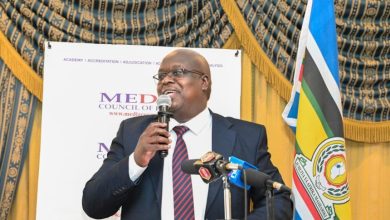
“This budget reflects the government’s effort to balance development priorities with macroeconomic stability, ensuring inclusive growth and improved service delivery for all Kenyans,” Mbadi said during the presentation of the budget.
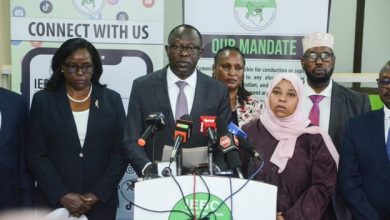
Speaking after the budget tabling by the CS, the National Assembly Budget Committee Chairperson and Alego Usonga MP, Samson Atandi, said the budget has revenue projections that will be easily achieved after appropriation.
However, a report tabled by the committee ahead of the presentation of the estimates indicates that the bulk of the budget will go towards debt financing.
A total of Sh 1.337 trillion has been set aside for the Consolidated Fund Services (CFS), which covers Sh1.098 trillion in debt interest payments and Sh239.6 billion for pensions and independent constitutional offices.
A total of Sh1.79 trillion was allocated recurrent expenditure, to fund government operations, public service salaries, and essential services with only Sh707.8 billion set aside for development spending, aimed at infrastructure, economic empowerment, and service delivery.
Additionally, Sh405.1 billion has been allocated as an equitable share to county governments to support devolved functions.
According to Mbadi, this is equivalent to 25.79 per cent of the actual revenues raised nationally for FY 2020/21.
The devolved units will also get Sh9.95 billion as additional conditional allocations from the National Government share of revenue and Sh56.91 billion as conditional allocation from development partners.