Juba copies Ruto in foreign traders’ crackdown
South Sudan orders Kenyans, Ugandans, Ethiopians and other foreigners out of small retail businesses weeks after Kenya issued similar directive

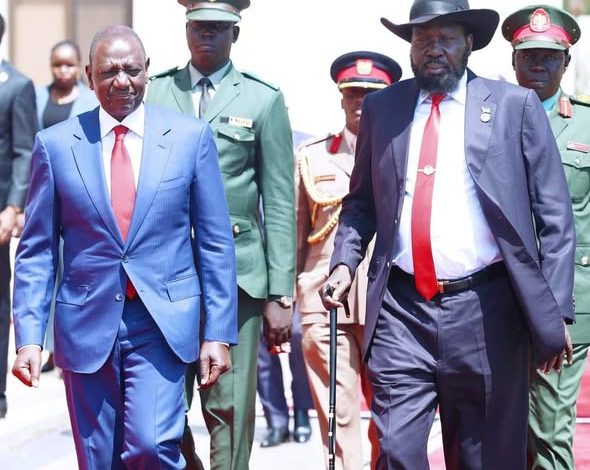
South Sudan has followed Kenya’s lead in cracking down on foreign nationals operating small-scale businesses, with authorities in Juba ordering Kenyans and other foreigners to quit retail trade and move into wholesale, manufacturing and larger investments.
Juba County Caretaker Commissioner Kalisto Lado Foustino said foreigners would no longer be allowed to run small shops, roadside stalls, chapati businesses, charcoal outlets or motorcycle taxi operations in the county.

The directive, issued on Monday evening, October 5, 2026 during a meeting with traders at Kuburi Haboba market in Gudele Two, comes barely a month after President William Ruto ordered a crackdown on foreigners operating small businesses in Kenya.
“Any foreigner must not be a retail trader in Juba County. No foreigner should do small business,” Lado declared.
“You cannot leave your country to come and make chapati, retail kilos of onions and tomatoes. What will our women in South Sudan sell?”
Lado said the government was not shutting its doors to foreign investors but wanted them to invest in businesses that create jobs and expand production rather than compete with ordinary South Sudanese in petty trade.
“To all Somalis, Ethiopians, Eritreans, Kenyans, Ugandans and all other nationals, we welcome you. We will give you security and have you stay without discrimination, but the retail business is only for South Sudanese,” he said.
He challenged foreign traders to establish wholesale businesses from which South Sudanese could buy goods for retail, or set up factories and employ locals.
“Open factories and employ South Sudanese but you cannot leave your country to come and squeeze and compete with South Sudanese in retail business,” Lado said.
The commissioner also questioned the presence of foreigners in businesses such as charcoal vending and boda boda operations, saying such activities should be left to South Sudanese youth.
“A foreigner coming to sell charcoal, what then will a South Sudanese do? A foreigner want to do boda boda in Juba. What will our youth in Juba do?” he asked.
The crackdown also targets roadside and open-air traders, who have been given seven days to comply with new requirements or risk demolition of their structures.
Traders have been ordered to construct concrete stalls, obtain licences and display their business names on electronic signs.
Lado said authorities would provide security and other services to businesses that complied with the law.
The directive bears striking similarities to Ruto’s September 7,2026 order for a crackdown on foreigners operating small shops, hawking and other businesses reserved for Kenyans.
Addressing Micro, Small and Medium Enterprises traders at State House, Nairobi, Ruto directed the Ministry of Investments, Trade and Industry to begin enforcement, saying the government would not wait for Parliament to pass proposed legislation.
“All those traders and hawkers doing these small businesses should close down,” Ruto said.
Ruto said Kenya had built investor confidence to attract serious investors capable of creating jobs and expanding production, not foreigners competing with Kenyans in petty trade.
“We have not built investor confidence so that hawkers can come to Kenya,” he said.
“The investor confidence we have built is for investors to come to Kenya, not hawkers and traders.”

He directed Trade Cabinet Secretary Lee Kinyanjui to launch the crackdown and tasked National Assembly Majority Leader Kimani Ichung’wah with helping advance legislation restricting foreigners from certain categories of businesses.
Ruto later clarified that Kenya remained open to foreign investors and workers who comply with immigration, employment and business laws, while warning Kenyans against harassing or attacking foreigners.
In South Sudan, the new directive could have significant implications for thousands of foreign traders who have established livelihoods in Juba, the country’s commercial hub.
South Sudan’s Investment Promotion Act already gives national investors priority in several sectors, including retail commerce, as the government seeks to protect local businesses, employment and economic opportunities.
The latest measures now put foreign traders operating at the bottom end of the retail economy on notice — in a striking echo of Kenya’s own push to reserve small-scale trade for its citizens.